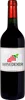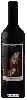
Winery Blank CanvasArtisanal Red Blend
 Red wine


In the mouth this red wine is a powerful with a nice balance between acidity and tannins.
This wine generally goes well with poultry, beef or veal.
Taste structure of the Artisanal Red Blend from the Winery Blank Canvas
Light | Bold | |
Smooth | Tannic | |
Dry | Sweet | |
Soft | Acidic |
In the mouth the Artisanal Red Blend of Winery Blank Canvas in the region of California is a powerful with a nice balance between acidity and tannins.
Food and wine pairings with Artisanal Red Blend
Pairings that work perfectly with Artisanal Red Blend



Original food and wine pairings with Artisanal Red Blend

The Artisanal Red Blend of Winery Blank Canvas matches generally quite well with dishes of beef, lamb or veal such as recipes of empanadas de carne (argentina), leg of lamb in butterfly (barbecue) or sliced endives with ham.
Details and technical informations about Winery Blank Canvas's Artisanal Red Blend.
Discover the grape variety: Admirable
According to genetic analyses carried out in Montpellier (Hérault), it is the result of a cross between the bicane and the chasselas obtained in Saumur (Maine and Loire Valley) by Doctor Auguste Courtiller in the 1840s, registered in the Official Catalogue of table grape varieties, list A1. Today, the Admirable de Courtiller is practically no longer multiplied.
Last vintages of this wine
The best vintages of Artisanal Red Blend from Winery Blank Canvas are 2017, 0
Informations about the Winery Blank Canvas
The Winery Blank Canvas is one of of the world's greatest estates. It offers 6 wines for sale in the of California to come and discover on site or to buy online.

The wine region of California
California is the largest and most important wine region in the United States. It represents the southern two-thirds (850 miles or 1,370 kilometers) of the country's west coast. (Oregon and Washington make up the rest. ) The state also spans nearly 10 degrees of latitude.
The word of the wine: Oenologist
Specialist in wine-making techniques. It is a profession and not a passion: one can be an oenophile without being an oenologist (and the opposite too!). Formerly attached to the Faculty of Pharmacy, oenology studies have become independent and have their own university course. Learning to make wine requires a good chemical background but also, increasingly, a good knowledge of the plant. Some oenologists work in laboratories (analysis). Others, the consulting oenologists, work directly in the properties.