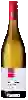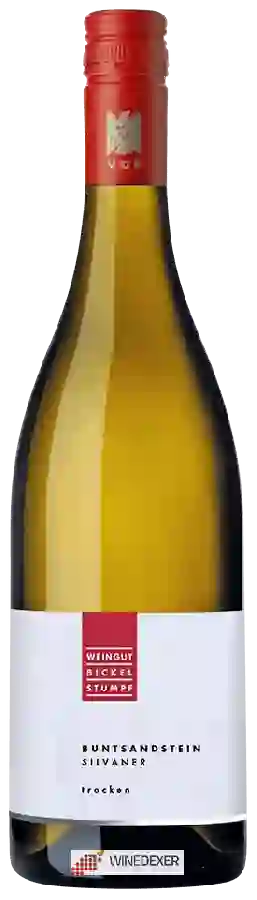
Winery Bickel StumpfSilvaner Buntsandstein Trocken
 White wine



In the mouth this white wine is a with a nice freshness.
This wine generally goes well with pork, vegetarian or poultry.

Taste structure of the Silvaner Buntsandstein Trocken from the Winery Bickel Stumpf
Light | Bold | |
Dry | Sweet | |
Soft | Acidic |
In the mouth the Silvaner Buntsandstein Trocken of Winery Bickel Stumpf in the region of Franken is a with a nice freshness.
Wine flavors and olphactive analysis

On the nose the Silvaner Buntsandstein Trocken of Winery Bickel Stumpf in the region of Franken often reveals types of flavors of earth, tree fruit or citrus fruit.
Food and wine pairings with Silvaner Buntsandstein Trocken
Pairings that work perfectly with Silvaner Buntsandstein Trocken



Original food and wine pairings with Silvaner Buntsandstein Trocken


The Silvaner Buntsandstein Trocken of Winery Bickel Stumpf matches generally quite well with dishes of veal, pork or vegetarian such as recipes of veal paupiettes with cider, cajun jumbalaya rice or summer tuna quiche.
Details and technical informations about Winery Bickel Stumpf's Silvaner Buntsandstein Trocken.
Discover the grape variety: Raisin de Corinthe
Light and fruity reds to drink young, with a clear ruby hue, smooth tannins and an airy palate, featuring signature aromas of red fruits (redcurrant, strawberry) and sweet notes. Mainly destined for Corinth raisins (currants), a speciality of the Peloponnese. Emblematic of Aegean viticulture, grown in Greece, Australia and California for raisins and a few simple wines. Greek black seedless (apyrene) variety with small, intensely coloured berries.
Last vintages of this wine
The best vintages of Silvaner Buntsandstein Trocken from Winery Bickel Stumpf are 2016, 2012, 2018, 0 and 2014.
Informations about the Winery Bickel Stumpf
The Winery Bickel Stumpf is one of of the world's greatest estates. It offers 38 wines for sale in the of Franken to come and discover on site or to buy online.

The wine region of Franken
Homeland of German Silvaner: dry, straight, mineral and lively whites with notes of green apple, citrus, fresh herbs and a saline touch, planted here for over 350 years (1,500 ha, a quarter of the vineyard). Also supple, floral Müller-Thurgau, taut Riesling, aromatic Bacchus. Some discreet reds (Spätburgunder). 6,040 ha in Bavaria along the Main around Würzburg, red sandstone and shell-limestone soils.
The word of the wine: Rootstock
American vine on which a French vine is grafted. This is the consequence of the phylloxera that destroyed the vineyard at the end of the 19th century: after much trial and error, it was discovered that the "pest" spared the roots of the American vines, and the technique became widespread.