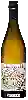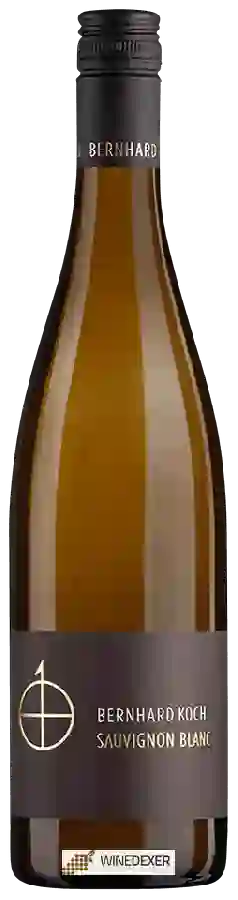
Winery Bernhard KochSauvignon Blanc
 White wine



In the mouth this white wine is a with a nice freshness.
This wine generally goes well with vegetarian, shellfish or goat cheese.

Taste structure of the Sauvignon Blanc from the Winery Bernhard Koch
Light | Bold | |
Dry | Sweet | |
Soft | Acidic |
In the mouth the Sauvignon Blanc of Winery Bernhard Koch in the region of Pfalz is a with a nice freshness.
Food and wine pairings with Sauvignon Blanc
Pairings that work perfectly with Sauvignon Blanc


Original food and wine pairings with Sauvignon Blanc
The Sauvignon Blanc of Winery Bernhard Koch matches generally quite well with dishes of shellfish, vegetarian or goat cheese such as recipes of cuttlefish with cider, quiche without eggs or pasta with zucchini sauce.
Details and technical informations about Winery Bernhard Koch's Sauvignon Blanc.
Discover the grape variety: Rouge du Pays
Structured and elegant reds with a deep ruby robe, firm yet melted tannins and a dense palate with fine acidity, showing signature aromas of red fruits (morello cherry, raspberry), spices, pepper and Alpine mineral notes. Fine Valaisan ageing potential. Star of the great Valaisan reds on the sun-drenched slopes of the Swiss Rhône, a typical expression of Alpine terroir. Valaisan synonym for Cornalin, native black grape from Valais, identical to Cornalin from the Aosta Valley.
Last vintages of this wine
The best vintages of Sauvignon Blanc from Winery Bernhard Koch are 2017, 2019, 2016, 2015 and 0.
Informations about the Winery Bernhard Koch
The Winery Bernhard Koch is one of of the world's great estates. It offers 96 wines for sale in the of Pfalz to come and discover on site or to buy online.

The wine region of Pfalz
Fleshy, dry, fruity Riesling is the region's signature: yellow peach, apricot, ripe citrus, lovely mineral tension. Germany's largest red-wine area (40%), with silky Spätburgunder showing red fruit and spice, darker structured Dornfelder, supple Portugieser. Some rounded Pinot Blanc and Pinot Gris. A 23,640 ha vineyard along the Haardt, among Germany's warmest (>2,000 h of sun).
The word of the wine: Venaison
Applied to the bouquet of a wine reminiscent of the smell of big game.