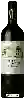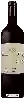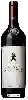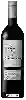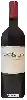
Château Mondotte BellisleSaint-Émilion Grand Cru
 Red wine


In the mouth this red wine is a powerful with a nice balance between acidity and tannins.
This wine generally goes well with poultry, beef or game (deer, venison).
Taste structure of the Saint-Émilion Grand Cru from the Château Mondotte Bellisle
Light | Bold | |
Smooth | Tannic | |
Dry | Sweet | |
Soft | Acidic |
In the mouth the Saint-Émilion Grand Cru of Château Mondotte Bellisle in the region of Bordeaux is a powerful with a nice balance between acidity and tannins.
Wine flavors and olphactive analysis



On the nose the Saint-Émilion Grand Cru of Château Mondotte Bellisle in the region of Bordeaux often reveals types of flavors of earth.
Food and wine pairings with Saint-Émilion Grand Cru
Pairings that work perfectly with Saint-Émilion Grand Cru



Original food and wine pairings with Saint-Émilion Grand Cru

The Saint-Émilion Grand Cru of Château Mondotte Bellisle matches generally quite well with dishes of beef, lamb or game (deer, venison) such as recipes of beef tongue with mushrooms, semolina-merguez salad or duck parmentier.
Details and technical informations about Château Mondotte Bellisle's Saint-Émilion Grand Cru.
Discover the grape variety: Roussanne
Roussane is a white grape variety, planted on an area of more than 700 ha. Originally from Montélimar, it is also found in Savoie, Languedoc and Roussillon, and grows very well in calcareous, poor, stony soil. It prefers to be pruned short. Roussane is also called fromenteau, barbin or bergeron. The young leaves are bubbled with fine down. When adult, they become thicker. It flowers in June and matures in mid-September. The grapes are cylindrical in shape, the berries are small and turn red when ripe, and the wine produced from pure Roussane is of extraordinary quality. It has a delicate aroma reminiscent of coffee, honeysuckle, iris and peony. The taste of this wine improves with age. It is part of the blend of the appellations Vin-de-Savoie, Côtes-du-Vallée du Rhône or Châteauneuf-du-Pape.
Informations about the Château Mondotte Bellisle
The Château Mondotte Bellisle is one of of the world's greatest estates. It offers 3 wines for sale in the of Saint-Émilion to come and discover on site or to buy online.

The wine region of Saint-Émilion
The wine region of Saint-Émilion is located in the region of Libournais of Bordeaux of France. Wineries and vineyards like the Domaine Baron Philippe de Rothschild or the Château Le Chatelet produce mainly wines red and white. The most planted grape varieties in the region of Saint-Émilion are Merlot, Cabernet franc and Cabernet-Sauvignon, they are then used in wines in blends or as a single variety. On the nose of Saint-Émilion often reveals types of flavors of black fruits, savory or cocoa and sometimes also flavors of bramble, raisin or sour cherry.
The wine region of Bordeaux
Bordeaux, in southwestern France, is one of the most famous, prestigious and prolific wine regions in the world. The majority of Bordeaux wines (nearly 90% of the production Volume) are the Dry, medium and Full-bodied red Bordeaux blends for which it is famous. The finest (and most expensive) are the wines of the great châteaux of Haut-Médoc and the right bank appellations of Saint-Émilion and Pomerol. The former focuses (at the highest level) on Cabernet Sauvignon, the latter on Merlot.
The word of the wine: Maccabeo
See macabeu.