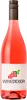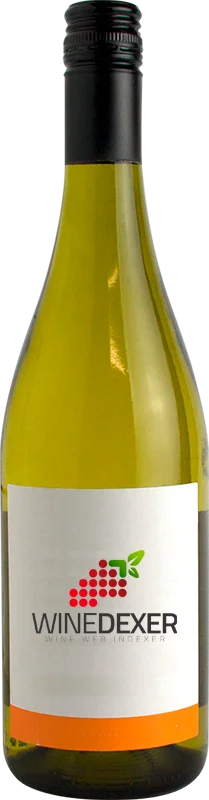
Winery BasignaniMarisa Dolce Semi-Sweet
 Sweet wine



This wine generally goes well with game (deer, venison) and spicy food.
Food and wine pairings with Marisa Dolce Semi-Sweet
Pairings that work perfectly with Marisa Dolce Semi-Sweet


Original food and wine pairings with Marisa Dolce Semi-Sweet
The Marisa Dolce Semi-Sweet of Winery Basignani matches generally quite well with dishes of game (deer, venison) or spicy food such as recipes of aiguillette of duck with honey or empanadas de carne (argentina).
Details and technical informations about Winery Basignani's Marisa Dolce Semi-Sweet.
Discover the grape variety: Chambourcin
Chambourcin noir is a grape variety that originated in France (Rhône-Alpes valley). It is a variety resulting from a cross of the same species (interspecific hybridization). It produces a variety of grape specially used for wine making. It is rare to find this grape to eat on our tables. This variety of grape is characterized by large bunches of grapes of medium size. Chambourcin noir can be found in several vineyards: Rhone Valley, Loire Valley, Savoie & Bugey, Beaujolais, Languedoc & Roussillon, Armagnac, Provence & Corsica.
Last vintages of this wine
The best vintages of Marisa Dolce Semi-Sweet from Winery Basignani are 0, 2008
Informations about the Winery Basignani
The Winery Basignani is one of of the world's greatest estates. It offers 15 wines for sale in the of Maryland to come and discover on site or to buy online.

The wine region of Maryland
Maryland is an American state on the eastern seaboard, located between Virginia to the South and Pennsylvania to the North. It covers 32,000 km², from the foothills of the Appalachian Mountains to the coastal plains of the eastern Part of the state. The Chesapeake Bay, a large inlet of the Atlantic Ocean, dominates Maryland's coastline, almost splitting the state in two. The range of grapes grown in Maryland is remarkably diverse - the result not only of the diverse Climate, but also of 350 years of experimentation by the state's winemakers.
The word of the wine: INAO glass
Glass adapted to wine tasting, created in the 1970s by the Institut national des appellations d'origine. At the time, it had the advantage of offering a standardised tool to all tasters. It is characterized by a wide base that allows for good ventilation and a narrow mouth (opening of the glass) to concentrate the aromas. Many high-performance glasses have been created based on this model.