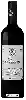
Château BasL'Echappee Belle Rouge
 Red wine


This wine generally goes well with beef, lamb or mature and hard cheese.
Food and wine pairings with L'Echappee Belle Rouge
Pairings that work perfectly with L'Echappee Belle Rouge



Original food and wine pairings with L'Echappee Belle Rouge

The L'Echappee Belle Rouge of Château Bas matches generally quite well with dishes of beef, lamb or spicy food such as recipes of borscht (russia), lamb tagine with artichokes and dried tomatoes or express chicken skewers with spices.
Details and technical informations about Château Bas's L'Echappee Belle Rouge.
Discover the grape variety: Vignoles
An interspecific cross obtained by Jean-François Ravat around 1930. Some people give it as parents the 6905 Seibel - or subéreux - and the pinot, to be confirmed however. It can still be found in North America and England, but is practically unknown in France.
Last vintages of this wine
The best vintages of L'Echappee Belle Rouge from Château Bas are 2011
Informations about the Château Bas
The Château Bas is one of of the world's great estates. It offers 23 wines for sale in the of Coteaux d'Aix-en-Provence to come and discover on site or to buy online.

The wine region of Coteaux d'Aix-en-Provence
Côteaux d'Aix-en-Provence is one of the main French appellations in the Provence wine region, located in the extreme southeast of the country. It is the second largest appellation in the region, with about 4,000 hectares North and west of Aix-en-Provence - the town from which it takes its name. The area also bears the tiny title of AOCPalette. The Côteaux d'Aix-en-Provence appellation was first introduced as a VDQS in 1956, having been informally known as Côteaux du Roy René (René d'Anjou being a 15th century French king famous for his love of wine and the Vine).
The wine region of Provence
Provence is a wine region in the far southeast of France, best known for the quality (and quantity) of its rosé wines and for its Warm, mild Climate. The modernization that is taking place in many of the traditional wine regions of southern France has not yet taken place to the same extent in Provence, but there are Clear signs of change. The region's Grape varieties, in particular, have come under scrutiny in recent decades. Traditional varieties such as Carignan, Barbaroux (Barbarossa from Sardinia) and Calitor are being replaced by more commercially viable varieties such as Grenache, Syrah and even Cabernet Sauvignon.
The word of the wine: Concentrate
Said of a wine that is rich in all its components (sugars in sweet wines, tannins in red wines, aromatic compounds) and that leaves an impression of density, intensity and depth.