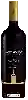
Winery BarbieriDromeus
 Red wine


This wine generally goes well with beef and mature and hard cheese.

Wine flavors and olphactive analysis


On the nose the Dromeus of Winery Barbieri in the region of California often reveals types of flavors of oak, red fruit or black fruit.
Food and wine pairings with Dromeus
Pairings that work perfectly with Dromeus


Original food and wine pairings with Dromeus
The Dromeus of Winery Barbieri matches generally quite well with dishes of beef or mature and hard cheese such as recipes of beef bourguignon with cookéo or quinoa parmentier and pumpkin purée.
Details and technical informations about Winery Barbieri's Dromeus.
Discover the grape variety: Palieri
Table grape with long clusters and spherical black-violet berries, thin skin and crisp flesh, sweet fresh taste. Grown in Italy for fresh consumption, prized for its attractive appearance and good shelf life. One of the Italian table grape varieties sold across European supermarkets and markets. Black Italian table grape variety obtained by crossing for fresh consumption.
Last vintages of this wine
The best vintages of Dromeus from Winery Barbieri are 2015, 0
Informations about the Winery Barbieri
The Winery Barbieri is one of of the world's great estates. It offers 21 wines for sale in the of Central Coast to come and discover on site or to buy online.

The wine region of Central Coast
Vast Californian coast (450 km) cooled by Pacific fogs. Cradle of great coastal Pinots and Chardonnays: fine silky Pinot Noir (cherry, raspberry, undergrowth) on Sta. Rita Hills, Santa Maria and Santa Lucia Highlands; ample taut Chardonnay, yellow fruit and saline minerality. Also spicy peppery Syrah, structured Cabernet and jammy Zinfandel on Paso Robles.
The wine region of California
Powerful, sunny reds: dense Napa Cabernet Sauvignon (blackcurrant, chocolate, tobacco, ample tannins), spicy, jammy Zinfandel from the Sierra Foothills, silky red-fruited Pinot Noir on the cool coast (Sonoma, Russian River, Central Coast). Opulent, buttery Chardonnay, notes of yellow fruit and vanilla. Varied climate, from the hot interior to the Pacific-cooled coast. 80% of US production, 139 AVAs including Napa (1st AVA, 1981).
The word of the wine: Heart-to-heart
Small stem from a quick bud that is removed during thinning.