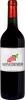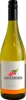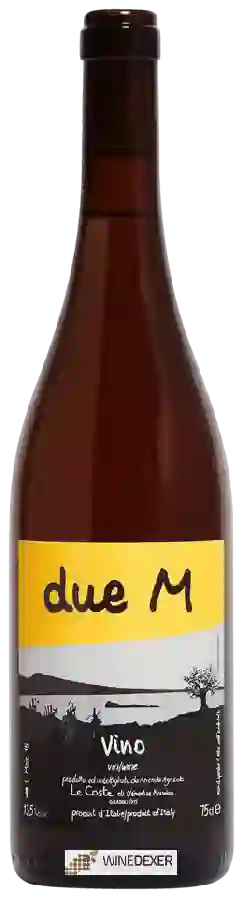
Winery Le CosteDue M
 White wine


In the mouth this white wine is a powerful with a nice freshness.
This wine generally goes well with vegetarian, appetizers and snacks or lean fish.

Taste structure of the Due M from the Winery Le Coste
Light | Bold | |
Dry | Sweet | |
Soft | Acidic |
In the mouth the Due M of Winery Le Coste in the region of Lazio is a powerful with a nice freshness.
Wine flavors and olphactive analysis

On the nose the Due M of Winery Le Coste in the region of Lazio often reveals types of flavors of tree fruit, citrus fruit or tropical fruit.
Food and wine pairings with Due M
Pairings that work perfectly with Due M



Original food and wine pairings with Due M


The Due M of Winery Le Coste matches generally quite well with dishes of pasta, vegetarian or appetizers and snacks such as recipes of chinese noodles with shrimp, quiche without pastry or chorizo puff pastry.
Details and technical informations about Winery Le Coste's Due M.
Discover the grape variety: Muska noir
Light, fruity reds with a pale ruby robe, soft tannins, and an airy palate with moderate acidity, offering understated red-fruit aromas. A discreet, rustic Provençal profile. Nearly extinct, preserved in INRAE varietal collections for its heritage value, it bears witness to the pre-phylloxera ampelographic diversity of southern France.
Last vintages of this wine
The best vintages of Due M from Winery Le Coste are 2017, 0, 2015
Informations about the Winery Le Coste
The Winery Le Coste is one of of the world's greatest estates. It offers 24 wines for sale in the of Lazio to come and discover on site or to buy online.

The wine region of Lazio
Two-millennia Roman vineyard, predominantly white on the volcanic soils of the Castelli Romani. Frascati DOC as figurehead: fresh, accessible whites based on Malvasia and Trebbiano, notes of green apple, white flowers and almond, slightly bitter finish. Also Bellone and Grechetto. Emblematic red: Cesanese del Piglio DOCG, fleshy with notes of ripe cherry, dry herbs and spice, round tannins.
The word of the wine: VDN
Natural sweet wine. Wine obtained by mutage of the must during fermentation by adding over-finished alcohol at 96 °, produced in the vineyards of Roussillon, Languedoc, Rhone Valley and Corsica.