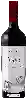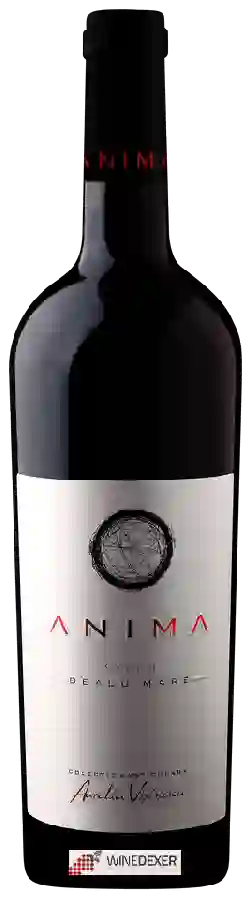
Winery Aurelia VișinescuAnima Syrah
 Red wine


This wine generally goes well with beef, lamb or mature and hard cheese.
The Anima Syrah of the Winery Aurelia Vișinescu is in the top 80 of wines of Romania and in the top 30 of wines of Dealu Mare.
Wine flavors and olphactive analysis




On the nose the Anima Syrah of Winery Aurelia Vișinescu in the region of Dealu Mare often reveals types of flavors of non oak, earth or oak and sometimes also flavors of spices, red fruit or black fruit.
Food and wine pairings with Anima Syrah
Pairings that work perfectly with Anima Syrah



Original food and wine pairings with Anima Syrah

The Anima Syrah of Winery Aurelia Vișinescu matches generally quite well with dishes of beef, lamb or spicy food such as recipes of korean bibimbap, lamb tagine with dried fruits and herbs or coconut chicken curry in thermomix.
Details and technical informations about Winery Aurelia Vișinescu's Anima Syrah.
Discover the grape variety: Soreli
Interspecific cross between sauvignonasse and kozma 20-3 obtained in 2002 at the University and Institute of Applied Genetics of Udine (Italy), which is also the case for fleurtai. Two genes for resistance to mildew could be identified, no gene for powdery mildew.
Last vintages of this wine
The best vintages of Anima Syrah from Winery Aurelia Vișinescu are 2012, 2016, 2011, 2009 and 0.
Informations about the Winery Aurelia Vișinescu
The Winery Aurelia Vișinescu is one of of the world's greatest estates. It offers 82 wines for sale in the of Dealu Mare to come and discover on site or to buy online.

The wine region of Dealu Mare
Dealu Mare DOC is a wine region located in the southern Part of Romania in Prahova and Buzau counties. It’s latitude of 45° compares with Bordeaux and Tuscany, and is one of the countries most highly regarded DOCs, especially for its red wines. The Vineyard zone stretches for 65 kilometers (40 miles) across the southern Carpathian Hills (Dealu Mare translates as Big Hill). Its width ranges from 3 to 12 kilometers (2-7.
The word of the wine: Tastevin
Metal cup, wide and of low height, being used to mirror and taste the wine. Still used in wine brotherhoods for its emblematic and folkloric character, the tastevin has been replaced by the various tasting glasses.