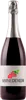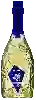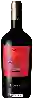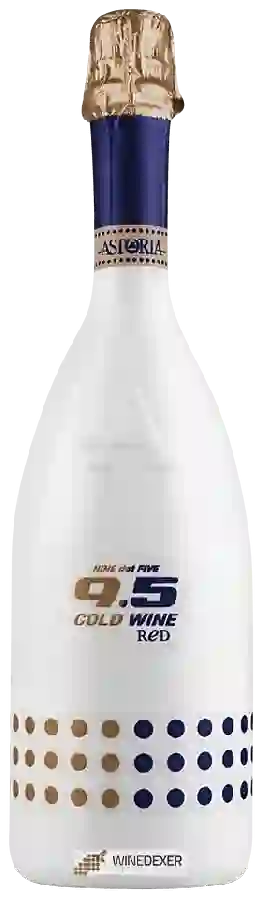
Winery Astoria9.5 Cold Red
 Sparkling wine



This wine generally goes well with pork, poultry or veal.
Food and wine pairings with 9.5 Cold Red
Pairings that work perfectly with 9.5 Cold Red



Original food and wine pairings with 9.5 Cold Red


The 9.5 Cold Red of Winery Astoria matches generally quite well with dishes of veal, pork or game (deer, venison) such as recipes of veal tagine with preserved lemons and saffron, beef carrots or rabbit with hunter's sauce.
Details and technical informations about Winery Astoria's 9.5 Cold Red.
Discover the grape variety: Pinot noir
Pinot noir is an important red grape variety in Burgundy and Champagne, and its reputation is well known! Great wines such as the Domaine de la Romanée Conti elaborate their wines from this famous grape variety, and make it a great variety. When properly vinified, pinot noit produces red wines of great finesse, with a wide range of aromas depending on its advancement (fruit, undergrowth, leather). it is also the only red grape variety authorized in Alsace. Pinot Noir is not easily cultivated beyond our borders, although it has enjoyed some success in Oregon, the United States, Australia and New Zealand.
Last vintages of this wine
The best vintages of 9.5 Cold Red from Winery Astoria are 0, 2015
Informations about the Winery Astoria
The Winery Astoria is one of of the world's great estates. It offers 87 wines for sale in the of Veneto to come and discover on site or to buy online.

The wine region of Veneto
Veneto is an important and growing wine region in northeastern Italy. Veneto is administratively Part of the Triveneto area, aLong with its smaller neighbors, Trentino-Alto Adige and Friuli-Venezia Giulia. In terms of geography, culture and wine styles, it represents a transition from the Alpine and Germanic-Slavic end of Italy to the warmer, drier, more Roman lands to the South. Veneto is slightly smaller than the other major Italian wine regions - Piedmont, Tuscany, Lombardy, Puglia and Sicily - but it produces more wine than any of them.
The word of the wine: Double magnum (or Marie-Jeanne)
Bottle with a capacity of 3 litres.