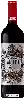
Winery AranleónVeroleón Organic Tinto
 Red wine


In the mouth this red wine is a powerful.
This wine generally goes well with poultry, beef or veal.
Taste structure of the Veroleón Organic Tinto from the Winery Aranleón
Light | Bold | |
Smooth | Tannic | |
Dry | Sweet | |
Soft | Acidic |
In the mouth the Veroleón Organic Tinto of Winery Aranleón in the region of Vinos de Pago is a powerful.
Food and wine pairings with Veroleón Organic Tinto
Pairings that work perfectly with Veroleón Organic Tinto



Original food and wine pairings with Veroleón Organic Tinto

The Veroleón Organic Tinto of Winery Aranleón matches generally quite well with dishes of beef, pasta or veal such as recipes of braised beef with guinness, eggplant and zucchini lasagna or roast veal with milk and rosemary.
Details and technical informations about Winery Aranleón's Veroleón Organic Tinto.
Discover the grape variety: Seibel 6468
Direct producer hybrid obtained by Albert Seibel (1844/1936), interbreeding between 4614 Seibel and 3011 Seibel. The 6468 Seibel was not multiplied very much, today it is not present in the vineyard anymore. It should be noted that it has been used in many other crosses to obtain, among others, the Villard blanc, the date tree of Saint Vallier, etc.
Last vintages of this wine
The best vintages of Veroleón Organic Tinto from Winery Aranleón are 2019, 0
Informations about the Winery Aranleón
The Winery Aranleón is one of of the world's great estates. It offers 27 wines for sale in the of Vinos de Pago to come and discover on site or to buy online.

The wine region of Vinos de Pago
Vinos de Pago, often abbreviated to VP, is a relatively New category of wine classification in Spain. It was introduced in 2003, to cover individual wineries whose wines fell outside the existing DO system (geographically or stylistically) but were nevertheless of consistently high quality. As of 2017, there were more than a dozen VPs, all of which are notable exceptions in regions not generally associated with high quality wines. More than half are in Castilla-La Mancha, and the rest in Navarra and Utiel-Requena.
The word of the wine: Grand Cru
In Burgundy, the fourth and final level of classification (above the regional, communal and premier cru appellations), designating the wines produced on delimited plots of land (the climats) whose name alone constitutes the appellation. The climats classified as Grand Cru are 32 in the Côte d'Or plus one in Chablis which is divided into 7 distinct climats. Representing barely 1.5% of the production, the Grand Crus are the aristocracy of Burgundy wines.