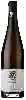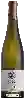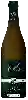
Winery Andreas LaibleDurbach Weisser Burgunder Trocken
 White wine
In the mouth this white wine is a with a nice freshness.
This wine generally goes well with rich fish (salmon, tuna etc), shellfish or mild and soft cheese.
Taste structure of the Durbach Weisser Burgunder Trocken from the Winery Andreas Laible
Light | Bold | |
Dry | Sweet | |
Soft | Acidic |
In the mouth the Durbach Weisser Burgunder Trocken of Winery Andreas Laible in the region of Baden is a with a nice freshness.
Food and wine pairings with Durbach Weisser Burgunder Trocken
Pairings that work perfectly with Durbach Weisser Burgunder Trocken



Original food and wine pairings with Durbach Weisser Burgunder Trocken

The Durbach Weisser Burgunder Trocken of Winery Andreas Laible matches generally quite well with dishes of rich fish (salmon, tuna etc), shellfish or mild and soft cheese such as recipes of salmon blanquette, cantonese rice or buckwheat patties rolled with sausage and raclette.
Details and technical informations about Winery Andreas Laible's Durbach Weisser Burgunder Trocken.
Discover the grape variety: Sauvignon-Rytos
An interspecific cross between Sauvignon Blanc and Bianca obtained in Italy and in 2002 by the University of Udine and the Institute of Applied Genetics. It should not be confused with the sauvignon-kretos. It can be found in Germany, Poland, ... in France it is almost unknown.
Informations about the Winery Andreas Laible
The Winery Andreas Laible is one of of the world's great estates. It offers 63 wines for sale in the of Baden to come and discover on site or to buy online.

The wine region of Baden
Baden is the southernmost of Germany's 13 official wine regions. It is also the warmest. Its relatively sunny, DryClimate permits the production of good-quality Spätburgunder (Pinot Noir) and ripe, relatively Full-bodied">Full-bodied examples of Grauburgunder (Pinot Gris) and Weissburgunder (Pinot Blanc). These are often made in oaked styles.
The word of the wine: Terroir
Strictly speaking, the notion of terroir corresponds to the geological characteristics of a vineyard. However, when we talk about terroir, we take into account the soil, the climate (even the microclimate), the flora, the fauna, and the human factor that characterizes the practices that make up the art of the craft.