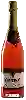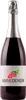
Winery AndréPink Champagne Extra Dry
 Sparkling wine
In the mouth this sparkling wine is a powerful with fine and regular bubbles.
This wine generally goes well with appetizers and snacks, lean fish or shellfish.

Taste structure of the Pink Champagne Extra Dry from the Winery André
Light | Bold | |
Soft | Acidic | |
Gentle | Fizzy |
In the mouth the Pink Champagne Extra Dry of Winery André in the region of California is a powerful with fine and regular bubbles.
Food and wine pairings with Pink Champagne Extra Dry
Pairings that work perfectly with Pink Champagne Extra Dry



Original food and wine pairings with Pink Champagne Extra Dry

The Pink Champagne Extra Dry of Winery André matches generally quite well with dishes of shellfish, appetizers and snacks or lean fish such as recipes of stuffed squid in the sétoise sauce, hummus (chickpea puree) or fillet of pollock with mushrooms in white wine sauce.
Details and technical informations about Winery André's Pink Champagne Extra Dry.
Discover the grape variety: Malvasia di Lipari
Intense, passito-style dessert wines with an amber-gold colour, a dense, unctuous palate and signature aromas of dried fruits (apricot, fig), honey, orange blossom, candied citrus and balsamic notes. A legendary Aeolian profile of great length. The undisputed star of Malvasia delle Lipari DOC, one of the great Mediterranean sweet wines.
Informations about the Winery André
The Winery André is one of of the world's great estates. It offers 19 wines for sale in the of California to come and discover on site or to buy online.

The wine region of California
Powerful, sunny reds: dense Napa Cabernet Sauvignon (blackcurrant, chocolate, tobacco, ample tannins), spicy, jammy Zinfandel from the Sierra Foothills, silky red-fruited Pinot Noir on the cool coast (Sonoma, Russian River, Central Coast). Opulent, buttery Chardonnay, notes of yellow fruit and vanilla. Varied climate, from the hot interior to the Pacific-cooled coast. 80% of US production, 139 AVAs including Napa (1st AVA, 1981).
The word of the wine: Aging on lees
Maturing on the lees enhances the stability, aromatic complexity and texture of white wines, which gain in body and volume. This phenomenon is induced by autolysis, the process of self-degradation of the lees.