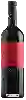
Winery AlcestiPerricone
 Red wine


In the mouth this red wine is a with a lot of tannins present in the mouth.
This wine generally goes well with beef, lamb or pasta.

Taste structure of the Perricone from the Winery Alcesti
Light | Bold | |
Smooth | Tannic | |
Dry | Sweet | |
Soft | Acidic |
In the mouth the Perricone of Winery Alcesti in the region of Sicily is a with a lot of tannins present in the mouth.
Food and wine pairings with Perricone
Pairings that work perfectly with Perricone



Original food and wine pairings with Perricone
The Perricone of Winery Alcesti matches generally quite well with dishes of beef, pasta or lamb such as recipes of beef pot-au-feu, the real recipe for carbonara or mouse of lamb with thyme.
Details and technical informations about Winery Alcesti's Perricone.
Discover the grape variety: Trebbiano
Fresh, thirst-quenching dry whites with a pale robe, a supple palate and preserved acidity of simple citrus (lemon), green apple, white flowers and neutral notes. A light profile to drink young. A family with several varieties (Toscano, Romagnolo, d'Abruzzo, Giallo), pillar of everyday Italian whites (Orvieto DOC, Frascati DOC, Trebbiano d'Abruzzo DOC). Exported to France as ugni blanc for Cognac and Armagnac distillation.
Last vintages of this wine
The best vintages of Perricone from Winery Alcesti are 2017, 0
Informations about the Winery Alcesti
The Winery Alcesti is one of of the world's great estates. It offers 34 wines for sale in the of Sicily to come and discover on site or to buy online.

The wine region of Sicily
Major qualitative renewal. Sunny, expressive reds: fleshy, spicy Nero d'Avola (black cherry, blackberry, liquorice), fine, mineral Nerello Mascalese on Etna (recalls Pinot Noir), light, crisp Frappato in Cerasuolo di Vittoria DOCG. Lively, saline whites: Catarratto, fat, iodised Grillo, taut Carricante, floral Inzolia. Amber, walnutty fortified Marsala.
The word of the wine: Vatting
After five to eight days of alcoholic fermentation, it is possible to prolong the maceration in order to extract the maximum amount of matter from the marc. The wines obtained in this way are rich and full-bodied, and in principle are intended for laying down.