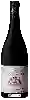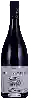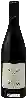
Winery Albert de MartalCote De Beaune-Villages
 Red wine
This wine generally goes well with poultry, beef or veal.
Food and wine pairings with Cote De Beaune-Villages
Pairings that work perfectly with Cote De Beaune-Villages



Original food and wine pairings with Cote De Beaune-Villages

The Cote De Beaune-Villages of Winery Albert de Martal matches generally quite well with dishes of beef, veal or game (deer, venison) such as recipes of fillet of beef in a foie gras and truffle crust, marinated veal skewers with herbs or roast pheasant.
Details and technical informations about Winery Albert de Martal's Cote De Beaune-Villages.
Discover the grape variety: Gold
Intraspecific crossing between A 3-94 (Hamburg Muscat x Sultana) and California K 3-78 (Hamburg Muscat x Queen of the Vines) obtained in the United States (California) in 1958 by Harold Paul Olmo (1909/2006). It can also be found in Greece, Cyprus, etc.
Informations about the Winery Albert de Martal
The Winery Albert de Martal is one of of the world's greatest estates. It offers 8 wines for sale in the of Burgundy to come and discover on site or to buy online.

The wine region of Burgundy
Bourgogne is the catch-all regional appellation title of the Burgundy wine region in eastern France ("Bourgogne" is the French name for Burgundy). Burgundy has a Complex and comprehensive appellation system; counting Premier Cru and Grand Cru titles, the region has over 700 appellation titles for its wines. Thus, Burgundy wines often come from one Vineyard (or several separate vineyards) without an appellation title specific to the region, Village or even vineyard. A standard Burgundy wine may be made from grapes grown in one or more of Burgundy's 300 communes.
The word of the wine: Distinguished
Said of a fine, elegant wine that is outstanding in its category.