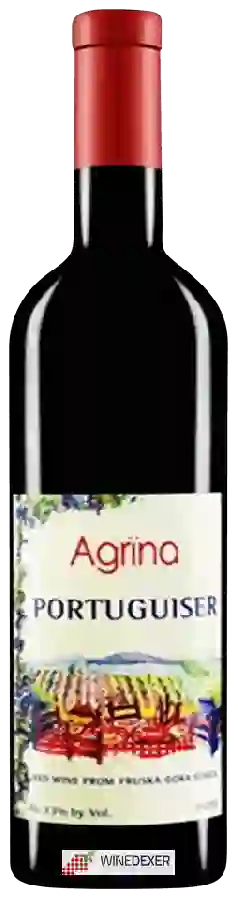
Winery AgrinaPortuguiser
 Red wine


This wine generally goes well with
Wine flavors and olphactive analysis





On the nose the Portuguiser of Winery Agrina in the region of Central Serbia often reveals types of flavors of non oak, earth or microbio and sometimes also flavors of oak, spices or red fruit.
Details and technical informations about Winery Agrina's Portuguiser.
Discover the grape variety: Petit Manseng
Petit Manseng is a white grape variety of Pyrenean origin. Its small berries have a hard, well-ventilated skin, which allows Petit Manseng to resist grey rot. On the other hand, this variety is very sensitive to noble rot, which concentrates the aromas and makes it possible to produce remarkable sweet wines with flavours of exotic fruits, grapefruit, honey, gingerbread, etc. Rich in alcohol and acidity, these wines are very well balanced and very fine. petit manseng also produces fruity dry white wines. It is also used in the AOC Béarn, Jurançon, Pacherenc-du-Vic-Bilh, Tursan...
Last vintages of this wine

The best vintages of Portuguiser from Winery Agrina are 2017, 2013, 2012, 2018 and 2014.
Informations about the Winery Agrina
The Winery Agrina is one of of the world's greatest estates. It offers 1 wines for sale in the of Central Serbia to come and discover on site or to buy online.

The wine region of Central Serbia
The wine region of Central Serbia of Serbia. Wineries and vineyards like the Domaine Matalj Vinarija or the Domaine Aleksandrovic produce mainly wines red, white and pink. The most planted grape varieties in the region of Central Serbia are Cabernet-Sauvignon, Merlot and Chardonnay, they are then used in wines in blends or as a single variety. On the nose of Central Serbia often reveals types of flavors of minerality, oil or cheese and sometimes also flavors of floral, cream or smoke.
The word of the wine: Maturing (champagne)
After riddling, the bottles are stored on "point", upside down, with the neck of one bottle in the bottom of the other. The duration of this maturation is very important: in contact with the dead yeasts, the wine takes on subtle aromas and gains in roundness and fatness. A brut without year must remain at least 15 months in the cellar after bottling, a vintage 36 months.