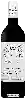
Winery Yarra YeringCabernet - Shiraz
 wine
wine
This wine generally goes well with
The Cabernet - Shiraz of the Winery Yarra Yering is in the top 0 of wines of Yarra Valley.
Details and technical informations about Winery Yarra Yering's Cabernet - Shiraz.
Discover the grape variety: Dauphine
A natural intraspecific cross between the ohanès and the Beirut date tree - also called afuz ali - obtained in South Africa and multiplied since 1983 by the Institute of Viticultural and Enological Research of Stellenbosch. Almost unknown in the rest of the wine world, it can however be found in Portugal, ... .
Informations about the Winery Yarra Yering
The Winery Yarra Yering is one of of the world's great estates. It offers 33 wines for sale in the of Yarra Valley to come and discover on site or to buy online.

The wine region of Yarra Valley
The wine region of Yarra Valley is located in the region of Port Phillip of Victoria of Australia. We currently count 315 estates and châteaux in the of Yarra Valley, producing 1556 different wines in conventional, organic and biodynamic agriculture. The wines of Yarra Valley go well with generally quite well with dishes .
The wine region of Victoria
Victoria is a relatively small but important Australian wine state. Located in the Southeastern corner of the continent, with a generally cool, ocean-influenced Climate, Victorian wine is remarkably diverse, producing all sorts of wines and styles in different climates. In all, the state covers almost 250,000 square kilometres (over 90,000 square miles) of land (almost the same Size as the US state of Texas), well under a quarter the size of its western neighbour, South Australia, and less than a third the size of New South Wales to the North. As such, Victoria's size - and to some extent, the state's viticultural history - can defy generalization.
The word of the wine: Blanc de noirs (champagne)
Champagne made from black grapes (pinot noir and/or meunier) only.