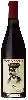
Winery Yannick PorasMas Du Rouyre La Clairette de Gallinette
 Red wine
This wine generally goes well with beef, veal or pasta.
Food and wine pairings with Mas Du Rouyre La Clairette de Gallinette
Pairings that work perfectly with Mas Du Rouyre La Clairette de Gallinette



Original food and wine pairings with Mas Du Rouyre La Clairette de Gallinette
The Mas Du Rouyre La Clairette de Gallinette of Winery Yannick Poras matches generally quite well with dishes of beef, pasta or veal such as recipes of venison stew with red wine, cannelloni au gratin stuffed with bolognese sauce or veal shoulder with cream and tarragon.
Details and technical informations about Winery Yannick Poras's Mas Du Rouyre La Clairette de Gallinette.
Discover the grape variety: Bacchus blanc
Intraspecific crossing between the sylvaner x riesling and the Müller-Thurgau obtained in 1933 in Germany by Peter Morio and Bernhard Husfeld. It can be found in England, Switzerland, Canada, ... in France, it is almost unknown.
Informations about the Winery Yannick Poras
The Winery Yannick Poras is one of of the world's greatest estates. It offers 4 wines for sale in the of Languedoc to come and discover on site or to buy online.

The wine region of Languedoc
Languedoc (formerly Coteaux du Languedoc) is a key appellation used in the Languedoc-Roussillon wine region of southern France. It covers Dry table wines of all three colors (red, white and rosé) from the entire region, but leaves Sweet and Sparkling wines to other more specialized appellations. About 75% of all Languedoc wines are red, with the remaining 25% split roughly down the middle between whites and rosés. The appellation covers most of the Languedoc region and almost a third of all the vineyards in France.
The wine region of Languedoc-Roussillon
Languedoc (formerly Coteaux du Languedoc) is a key appellation used in the Languedoc-Roussillon wine region of southern France. It covers Dry table wines of all three colors (red, white and rosé) from the entire region, but leaves Sweet and Sparkling wines to other more specialized appellations. About 75% of all Languedoc wines are red, with the remaining 25% split roughly down the middle between whites and rosés. The appellation covers most of the Languedoc region and almost a third of all the vineyards in France.
The word of the wine: Roast (taste of)
Characteristic taste of wines made from grapes affected by botrytis cinerea.