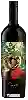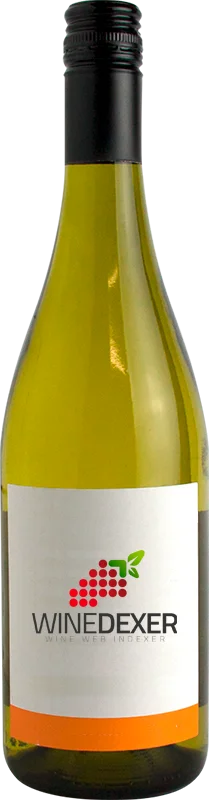
Winery WINCAlchymist White
 White wine



In the mouth this white wine is a powerful.
This wine generally goes well with pork, poultry or shellfish.
Taste structure of the Alchymist White from the Winery WINC
Light | Bold | |
Dry | Sweet | |
Soft | Acidic |
In the mouth the Alchymist White of Winery WINC in the region of California is a powerful.
Wine flavors and olphactive analysis



On the nose the Alchymist White of Winery WINC in the region of California often reveals types of flavors of pineapple, peach or pear and sometimes also flavors of tree fruit, citrus fruit or tropical fruit.
Food and wine pairings with Alchymist White
Pairings that work perfectly with Alchymist White



Original food and wine pairings with Alchymist White

The Alchymist White of Winery WINC matches generally quite well with dishes of pasta, pork or shellfish such as recipes of chinese bowl, rabbit with cider and mushrooms or shrimp curry (reunionese recipe).
Details and technical informations about Winery WINC's Alchymist White.
Discover the grape variety: Sweet Sapphire
Intra-specific cross between Beitamouni and C22-121 obtained in 2004 by David Cain at the I.F.G. of Bakersfield in California (United States). Its cultivation started in 2007. It is already known in the United States, Brazil, Australia, South Africa ... almost unknown in France. It should be noted that this variety is very much in demand in China, where it represents an important market.
Last vintages of this wine
The best vintages of Alchymist White from Winery WINC are 2013
Informations about the Winery WINC
The Winery WINC is one of of the world's great estates. It offers 163 wines for sale in the of California to come and discover on site or to buy online.

The wine region of California
California is the largest and most important wine region in the United States. It represents the southern two-thirds (850 miles or 1,370 kilometers) of the country's west coast. (Oregon and Washington make up the rest. ) The state also spans nearly 10 degrees of latitude.
The word of the wine: Disgorging (champagne)
This is the evacuation of the deposit formed by the yeasts during the second fermentation in the bottle, by opening the bottle. The missing volume is completed with the liqueur de dosage - a mixture of wine and cane sugar - before the final cork is placed. For some years now, some producers have been replacing this sugar with rectified concentrated musts (concentrated grape juice) which give excellent results. A too recent dosage (less than three months) harms the gustatory harmony of the champagne.