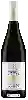
Weingut Karl SchmidtBretzenheimer Pastorei Spätburgunder Auslese Trocken
 Red wine
In the mouth this red wine is a with a nice freshness.
This wine generally goes well with poultry, beef or veal.
Taste structure of the Bretzenheimer Pastorei Spätburgunder Auslese Trocken from the Weingut Karl Schmidt
Light | Bold | |
Smooth | Tannic | |
Dry | Sweet | |
Soft | Acidic |
In the mouth the Bretzenheimer Pastorei Spätburgunder Auslese Trocken of Weingut Karl Schmidt in the region of Nahe is a with a nice freshness.
Food and wine pairings with Bretzenheimer Pastorei Spätburgunder Auslese Trocken
Pairings that work perfectly with Bretzenheimer Pastorei Spätburgunder Auslese Trocken



Original food and wine pairings with Bretzenheimer Pastorei Spätburgunder Auslese Trocken

The Bretzenheimer Pastorei Spätburgunder Auslese Trocken of Weingut Karl Schmidt matches generally quite well with dishes of beef, veal or game (deer, venison) such as recipes of brazilian feijoada, calf sweetbread with mushrooms or venison stew.
Details and technical informations about Weingut Karl Schmidt's Bretzenheimer Pastorei Spätburgunder Auslese Trocken.
Discover the grape variety: Isa
Crossing obtained in 1964 between the gloria hungariae or glory of Hungary (Hungarian millennium X muscatel Thalloczy Lajos) by the cardinal. The Isa is registered since 1996 in the Official Catalogue of table grape varieties list A1.
Informations about the Weingut Karl Schmidt
The Weingut Karl Schmidt is one of of the world's greatest estates. It offers 18 wines for sale in the of Nahe to come and discover on site or to buy online.

The wine region of Nahe
Nahe is one of the smaller German wine regions, named after the Nahe river which joins the Rhein at Rheinhessen/bingen">Bingen. The viticultural carea here is characterised by dramatic topography with steep slopes and craggy outcrops of metamorphic rock. Like most of the regions on or near the Rhine, its most prestigious wines are made from Riesling. There are around 4,000 hectares (10,000 acres) of Vineyards, spread across seven Grosslagen (wine districts) and over 300 Einzellagen (individual vineyard sites).
The word of the wine: Vegetative cycle
All the different phases of the vine's development: winter rest period, budburst, inflorescence, flowering, fruit set, veraison, ripening.