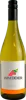
Weingut Karl SchmidtBretzenheimer Hofgut Riesling Spätlese
 wine
wine
This wine generally goes well with
The Bretzenheimer Hofgut Riesling Spätlese of the Weingut Karl Schmidt is in the top 0 of wines of Nahe.
Details and technical informations about Weingut Karl Schmidt's Bretzenheimer Hofgut Riesling Spätlese.
Discover the grape variety: Palieri
This variety was obtained in 1958 in Velletri (Italy) by Michèle Palieri by crossing Alphonse Lavallée and molinera gorda or red malaga. Because of its great vigour, it is ideal for creating a trellis or a pergola. Little known in France, it can be found in Italy, Spain, Portugal, Morocco, etc.
Informations about the Weingut Karl Schmidt
The Weingut Karl Schmidt is one of of the world's greatest estates. It offers 18 wines for sale in the of Nahe to come and discover on site or to buy online.

The wine region of Nahe
Nahe is one of the smaller German wine regions, named after the Nahe river which joins the Rhein at Rheinhessen/bingen">Bingen. The viticultural carea here is characterised by dramatic topography with steep slopes and craggy outcrops of metamorphic rock. Like most of the regions on or near the Rhine, its most prestigious wines are made from Riesling. There are around 4,000 hectares (10,000 acres) of Vineyards, spread across seven Grosslagen (wine districts) and over 300 Einzellagen (individual vineyard sites).
The word of the wine: Phylloxera
Aphid that came from America and ravaged European vineyards at the end of the 19th century. It lives on the roots of the vine, from which it pumps the sap. The only vines capable of resisting it had to be imported from the United States, and then grafted onto their root system the wood of traditional French grape varieties. Today, grafted vines are always planted.