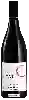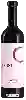
Weingut ErnstDeutschkreuz Blaufränkisch Rosé
 Sparkling wine


This wine generally goes well with pork, rich fish (salmon, tuna etc) or mature and hard cheese.
Food and wine pairings with Deutschkreuz Blaufränkisch Rosé
Pairings that work perfectly with Deutschkreuz Blaufränkisch Rosé



Original food and wine pairings with Deutschkreuz Blaufränkisch Rosé

The Deutschkreuz Blaufränkisch Rosé of Weingut Ernst matches generally quite well with dishes of pork, rich fish (salmon, tuna etc) or mature and hard cheese such as recipes of pasta carbonara, leek and fresh salmon tart or parmesan cream brûlée.
Details and technical informations about Weingut Ernst's Deutschkreuz Blaufränkisch Rosé.
Discover the grape variety: Cabernet franc
Cabernet Franc is one of the oldest red grape varieties in Bordeaux. The Libourne region is its terroir where it develops best. The terroirs of Saint-Emilion and Fronsac allow it to mature and develop its best range of aromas. It is also the majority in many blends. The very famous Château Cheval Blanc, for example, uses 60% Cabernet Franc. The wines produced with Cabernet Franc are medium in colour with fine tannins and subtle aromas of small red fruits and spices. When blended with Merlot and Cabernet Sauvignon, it brings complexity and a bouquet of aromas to the wine. It produces fruity wines that can be drunk quite quickly, but whose great vintages can be kept for a long time. It is an earlier grape variety than Cabernet Sauvignon, which means that it is planted as far north as the Loire Valley. In Anjou, it is also used to make sweet rosé wines. Cabernet Franc is now used in some twenty countries in Europe and throughout the world.
Last vintages of this wine
The best vintages of Deutschkreuz Blaufränkisch Rosé from Weingut Ernst are 0
Informations about the Weingut Ernst
The Weingut Ernst is one of of the world's great estates. It offers 10 wines for sale in the of Niederösterreich to come and discover on site or to buy online.

The wine region of Niederösterreich
Niederösterreich, or Lower Austria, is a wine region in the Northeast of Austria bordering Slovakia and the Czech Republic. It is the country's largest wine region, both geographically and in terms of production. There are around 28,000 hectares (69,000 acres) of vineyards. These are responsible for roughly half of Austria's total wine output.
The wine region of Weinland
Weinviertel DAC – whose name translates as "wine quarter" – is an appellation in Niederösterreich (Lower Austria). It is by far the largest Districtus Austriae Controllatus wine region in Austria. It was also the first Austrian wine region to be given that title, in 2002, with a DAC Reserve designation added in 2009. The designation applies only to white wines from the Grüner Veltliner Grape variety.
The word of the wine: Retrieved from
Wine that has lost its aromatic potential after prolonged aeration.