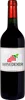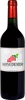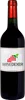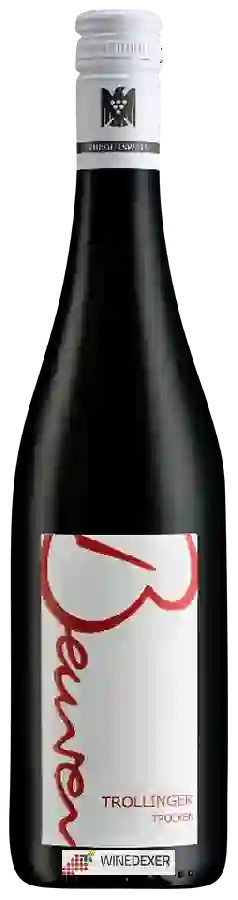
Winery BeurerTrollinger Trocken
 Red wine



This wine generally goes well with
Wine flavors and olphactive analysis




On the nose the Trollinger Trocken of Winery Beurer in the region of Württemberg often reveals types of flavors of non oak, earth or oak and sometimes also flavors of tree fruit, spices or red fruit.
Details and technical informations about Winery Beurer's Trollinger Trocken.
Discover the grape variety: Temjanika
Last vintages of this wine
The best vintages of Trollinger Trocken from Winery Beurer are 2014, 2018, 2017, 0 and 2019.
Informations about the Winery Beurer
The Winery Beurer is one of of the world's greatest estates. It offers 44 wines for sale in the of Württemberg to come and discover on site or to buy online.

The wine region of Württemberg
Rare predominantly red region in Germany (nearly 70%). Supple, fruity everyday reds: light, crisp Trollinger (Schiava) with red fruits, more structured, spicy, deep Lemberger (Blaufränkisch), generous Schwarzriesling (Pinot Meunier). Riesling king of whites (>2,000 ha), lively and mineral, citrus and green apple. Germany's 4th region (11,500 ha) on the Neckar slopes around Heilbronn and Stuttgart.
The word of the wine: Tressallier
White grape variety from the Allier region, identical to the Sacy variety grown in Burgundy. Rarely vinified on its own, it is used in the blending of Saint-Pourçain white wines, associated with chardonnay, the main grape variety of the appellation. Syn.: sacy.