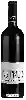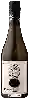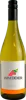
Weingut ArtnerGelber Muskateller
 White wine



This wine generally goes well with
The Gelber Muskateller of the Weingut Artner is in the top 80 of wines of Niederösterreich.
Details and technical informations about Weingut Artner's Gelber Muskateller.
Discover the grape variety: Seyval blanc
A relative of the Saint Pepin, this direct-producing hybrid is the result of an interspecific cross between 5656 Seibel and Ray d'Or (4986 Seibel) obtained in 1921 by the Seyve-Villard company, formerly based in Saint Vallier (Drôme). Seyval blanc is registered in the official catalogue of wine grape varieties, list A. It can be found in the United States, Canada, Brazil, Australia, South Africa, Great Britain, the Netherlands, Germany, Romania, Switzerland, etc. It is practically non-existent in France and is in danger of disappearing.
Last vintages of this wine
The best vintages of Gelber Muskateller from Weingut Artner are 2013, 2011, 2015, 0 and 2018.
Informations about the Weingut Artner
The Weingut Artner is one of of the world's great estates. It offers 28 wines for sale in the of Niederösterreich to come and discover on site or to buy online.

The wine region of Niederösterreich
Niederösterreich, or Lower Austria, is a wine region in the Northeast of Austria bordering Slovakia and the Czech Republic. It is the country's largest wine region, both geographically and in terms of production. There are around 28,000 hectares (69,000 acres) of vineyards. These are responsible for roughly half of Austria's total wine output.
The wine region of Weinland
Weinviertel DAC – whose name translates as "wine quarter" – is an appellation in Niederösterreich (Lower Austria). It is by far the largest Districtus Austriae Controllatus wine region in Austria. It was also the first Austrian wine region to be given that title, in 2002, with a DAC Reserve designation added in 2009. The designation applies only to white wines from the Grüner Veltliner Grape variety.
The word of the wine: Rafle (taste of)
A taste considered a defect, characterized by an unpleasant astringency and bitterness, brought by the stalk during the vinification process. In order to avoid it, destemming before vinification is a common practice.