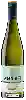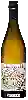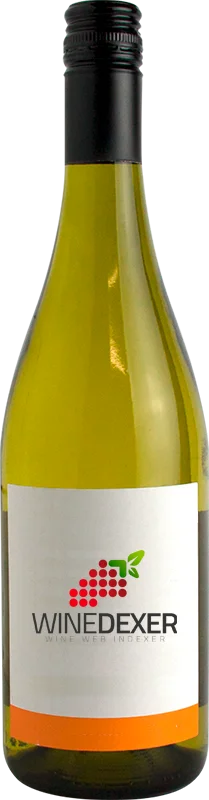
Winery WeinbietPhilipp Bassler Grauburgunder Trocken
 White wine



In the mouth this white wine is a .
This wine generally goes well with pork, cured meat or mushrooms.
Taste structure of the Philipp Bassler Grauburgunder Trocken from the Winery Weinbiet
Light | Bold | |
Dry | Sweet | |
Soft | Acidic |
In the mouth the Philipp Bassler Grauburgunder Trocken of Winery Weinbiet in the region of Pfalz is a .
Food and wine pairings with Philipp Bassler Grauburgunder Trocken
Pairings that work perfectly with Philipp Bassler Grauburgunder Trocken


Original food and wine pairings with Philipp Bassler Grauburgunder Trocken

The Philipp Bassler Grauburgunder Trocken of Winery Weinbiet matches generally quite well with dishes of pork, spicy food or mushrooms such as recipes of paupiettes with tomato sauce, chicken tagine or potato cake with serrano ham.
Details and technical informations about Winery Weinbiet's Philipp Bassler Grauburgunder Trocken.
Discover the grape variety: Olivette blanche
This variety is of unknown origin and is not related to the black olivette. The flowers of the Olivette blanche are physiologically female, which has led it to be cultivated very often in association with other varieties. Today, it is practically no longer multiplied, although it is registered in the Official Catalogue of vine varieties, list A1.
Last vintages of this wine
The best vintages of Philipp Bassler Grauburgunder Trocken from Winery Weinbiet are 0
Informations about the Winery Weinbiet
The Winery Weinbiet is one of of the world's greatest estates. It offers 95 wines for sale in the of Pfalz to come and discover on site or to buy online.

The wine region of Pfalz
Pfalz is a key wine producing region in western Germany, located between the Rhein/Rhine river and the low-lying Haardt mountain range (a natural continuation of the Alsatian Vosges). It covers a rectangle of land 45 miles (75km) Long and 15 miles (25km) wide. To the NorthLiesRheinhessen; to the South, the French border and Alsace. In terms of both quality and quantity, Pfalz is one of Germany's most important regions, and one which shows great promise for the future.
The word of the wine: Presses
The juice that results from pressing the grapes after fermentation. At the end of the maceration, the vats are emptied, the first juice obtained is called the free-run wine and the marc remaining at the bottom of the vat is then pressed to give the press wine. We say more quickly "the presses". Their quality varies according to the vintage and the maceration. A too vigorous extraction releases the tannins of pips and the wine of press can then prove to be very astringent. Often the winemaker raises it separately, deciding later whether or not to incorporate it totally or partially into the grand vin.