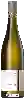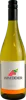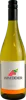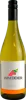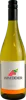
Winery WasemIngelheimer Spätburgunder Feinherb
 Red wine
In the mouth this red wine is a with a nice freshness.
This wine generally goes well with poultry, beef or veal.
Taste structure of the Ingelheimer Spätburgunder Feinherb from the Winery Wasem
Light | Bold | |
Smooth | Tannic | |
Dry | Sweet | |
Soft | Acidic |
In the mouth the Ingelheimer Spätburgunder Feinherb of Winery Wasem in the region of Rheinhessen is a with a nice freshness.
Food and wine pairings with Ingelheimer Spätburgunder Feinherb
Pairings that work perfectly with Ingelheimer Spätburgunder Feinherb



Original food and wine pairings with Ingelheimer Spätburgunder Feinherb

The Ingelheimer Spätburgunder Feinherb of Winery Wasem matches generally quite well with dishes of beef, veal or game (deer, venison) such as recipes of monkfish armorican style, vital tone / vitello tonnato (italy) or rabbit stew the old fashioned way.
Details and technical informations about Winery Wasem's Ingelheimer Spätburgunder Feinherb.
Discover the grape variety: Othello
Interspecific cross between the Clinton and the frankenthal or black-hamburg obtained in 1859 by Charles Arnold of Paris in Canada (Brant County in Ontario). In France, it is one of the six hybrids prohibited since 1935 (included in the European regulations): the Clinton, the Herbemont, the Isabelle, the Jacquez, the Noah and the Othello. It has been used as a sire in several crosses, notably by Couderc and Seibel. Today, the Othello has practically disappeared.
Informations about the Winery Wasem
The Winery Wasem is one of of the world's great estates. It offers 70 wines for sale in the of Rheinhessen to come and discover on site or to buy online.

The wine region of Rheinhessen
Rheinhessen is Germany's largest region for producing the quality wines of the Qualitätswein bestimmter Anbaugebiete (QbA) and Prädikatswein designations, with roughly 26,500 hectares (65,000 acres) of Vineyard">Vineyards as of 2014. Many of its most significant viticultural areas are favorably influenced by the Rhine river, which runs aLong its North and eastern borders. The Rhine, along with the Nahe river to the west and the Haardt mountains to its South, form a natural border. Rheinhessen covers an area south of Rheingau, north of Pfalz and east of Nahe, and is located within the Rhineland-Palatinate federal state.
The word of the wine: Organic (agriculture)
A type of agriculture (and therefore viticulture) based on respect for living organisms and biological cycles, and which excludes the use of synthetic treatment products and synthetic fertilizers. Organic farming is guaranteed by the respect of a set of specifications.