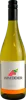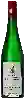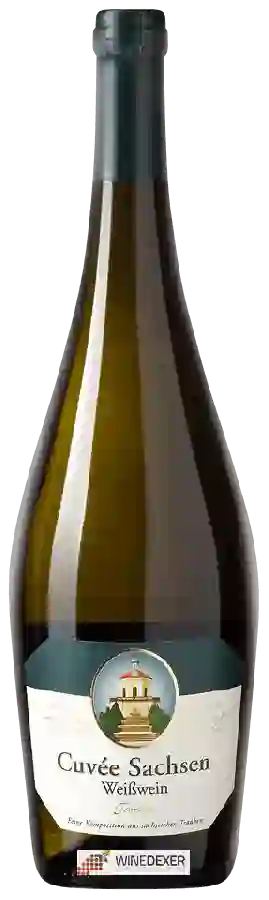
Winery Schloss WackerbarthCuvée Sachsen Weiss Trocken
 White wine


This wine is a blend of 2 varietals which are the Müller-Thurgau and the Riesling.
This wine generally goes well with pork, vegetarian or poultry.

Food and wine pairings with Cuvée Sachsen Weiss Trocken
Pairings that work perfectly with Cuvée Sachsen Weiss Trocken



Original food and wine pairings with Cuvée Sachsen Weiss Trocken



The Cuvée Sachsen Weiss Trocken of Winery Schloss Wackerbarth matches generally quite well with dishes of pork, rich fish (salmon, tuna etc) or spicy food such as recipes of flammekueche (with laughing cow), salmon pavés en papillote or californian sushi (reverse maki).
Details and technical informations about Winery Schloss Wackerbarth's Cuvée Sachsen Weiss Trocken.
Discover the grape variety: Müller-Thurgau
Light, aromatic whites with a tender palate and moderate acidity, with muscat-like aromas of white flowers, apple, citrus, peach and honeyed notes. Made as easy dry whites, popular semi-dry wines and some sparkling cuvées. Widely planted in Germany (Rheinhessen, Baden), northern Italy (Alto Adige, Trentino), Austria, Switzerland, Hungary and Japan. Cross of riesling × madeleine royale created in 1882 by Hermann Müller in Geisenheim.
Last vintages of this wine
The best vintages of Cuvée Sachsen Weiss Trocken from Winery Schloss Wackerbarth are 2014, 0, 2008
Informations about the Winery Schloss Wackerbarth
The Winery Schloss Wackerbarth is one of of the world's great estates. It offers 78 wines for sale in the of Sachsen to come and discover on site or to buy online.

The wine region of Sachsen
The northernmost and one of the smallest German wine regions (507 ha), the Elbe valley on loess and granite. Lively, mineral whites largely dominate (81%). Signature Müller-Thurgau with signature notes of light muscat, green apple, white flowers and a citrus touch, supple palate. Taut, chiselled Riesling (lemon, peach), round Weißburgunder (pear, almond), ample Grauburgunder, rare aromatic Goldriesling.
The word of the wine: Bleeding
Old practice for red wines. As soon as the vat is filled with grapes, the tap is opened. A sweet but clear juice escapes from the vat (it can also be used to make rosé). The colour and density of the juice is enhanced, but it should not be overdone. Rarely more than 10% of the volume of a vat, otherwise you risk losing fruit and bringing in bitterness.