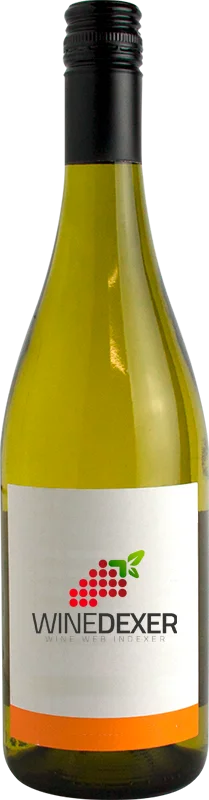
Winery VinsD.S.C Sauvignon Neskorý Zber Suché
 White wine


This wine generally goes well with vegetarian, rich fish (salmon, tuna etc) or shellfish.
Food and wine pairings with D.S.C Sauvignon Neskorý Zber Suché
Pairings that work perfectly with D.S.C Sauvignon Neskorý Zber Suché



Original food and wine pairings with D.S.C Sauvignon Neskorý Zber Suché
The D.S.C Sauvignon Neskorý Zber Suché of Winery Vins matches generally quite well with dishes of rich fish (salmon, tuna etc), shellfish or vegetarian such as recipes of salmon with sorrel, real swiss fondue or quiche with bacon and gruyère cheese.
Details and technical informations about Winery Vins's D.S.C Sauvignon Neskorý Zber Suché.
Discover the grape variety: Bacchus blanc
Intraspecific crossing between the sylvaner x riesling and the Müller-Thurgau obtained in 1933 in Germany by Peter Morio and Bernhard Husfeld. It can be found in England, Switzerland, Canada, ... in France, it is almost unknown.
Last vintages of this wine
The best vintages of D.S.C Sauvignon Neskorý Zber Suché from Winery Vins are 0
Informations about the Winery Vins
The Winery Vins is one of of the world's greatest estates. It offers 31 wines for sale in the of Malokarpatská to come and discover on site or to buy online.

The wine region of Malokarpatská
The wine region of Malokarpatská of Slovak Republic. Wineries and vineyards like the Domaine Rariga or the Domaine Vladimir Valenta produce mainly wines white, red and pink. The most planted grape varieties in the region of Malokarpatská are Cabernet-Sauvignon, Riesling and Gewurztraminer, they are then used in wines in blends or as a single variety. On the nose of Malokarpatská often reveals types of flavors of tree fruit, apples or citrus fruit and sometimes also flavors of non oak, earth or microbio.
The word of the wine: Magnum
Bottle with a capacity of 1.5 litres.