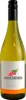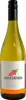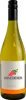
Winery Víno z KobylíPálava
 White wine


This wine generally goes well with
Details and technical informations about Winery Víno z Kobylí's Pálava.
Discover the grape variety: Acadie
Complex interspecific cross between 13 053 Seibel (7042 Seibel x 5409 Seibel) or cascade and 14 287 Seyve-Villard (6746 Seibel x Couderc 299-35) obtained in 1953 by Bradt Ollie A. at the Ontario Horticultural Research Institute (Canada). It can also be found in the United States and is almost unknown in France. From this same cross was born the veeblanc.
Last vintages of this wine

The best vintages of Pálava from Winery Víno z Kobylí are 2017, 0, 2015
Informations about the Winery Víno z Kobylí
The Winery Víno z Kobylí is one of of the world's great estates. It offers 41 wines for sale in the of Morava to come and discover on site or to buy online.

The wine region of Morava
Moravia, with roughly 95 percent of the nation's Vine plantings, is the engine room of the Czech Republic's wine industry. The Center of intensively farmed bulk-wine production is also showing great promise as a producer of quality white wines. This is largely thanks to its cool Climate, comparable in many ways to that in Nahe or Pfalz, the white-wine specialists a few hundred miles west in Germany. Moravian winelands enjoy a Vineyard year well suited to the production of Complex aromatics with good Acidity.
The word of the wine: Filtration
Clarification of the wine using filters.