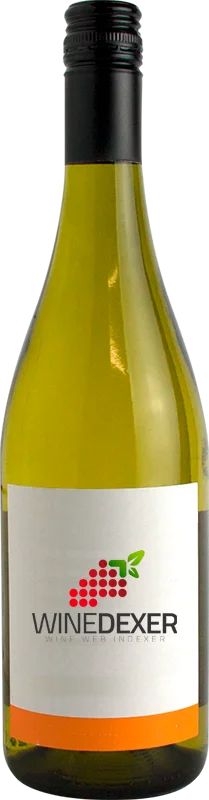
Winery Víno z DvoraSilvánske Zelené
 White wine
This wine generally goes well with poultry, lean fish or shellfish.
Food and wine pairings with Silvánske Zelené
Pairings that work perfectly with Silvánske Zelené



Original food and wine pairings with Silvánske Zelené


The Silvánske Zelené of Winery Víno z Dvora matches generally quite well with dishes of shellfish, spicy food or poultry such as recipes of linguine with shrimp and spicy tomato sauce, chicken curry with coconut milk and cashew nuts or chicken curry samoussas.
Details and technical informations about Winery Víno z Dvora's Silvánske Zelené.
Discover the grape variety: Romorantin
Romorantin is a white grape variety named after the town in the Loir-et-Cher region where it originated. It was François 1er who planted the first Romorantin vines here in 1519, and it has gradually been replaced by Sauvignon, considered more aromatic, and is only planted in the Loir-et-Cher region, where it is the source of the Cour-Cheverny AOC. Its bunches of small white berries, which turn pink when ripe, are resistant to grey rot. Cour-Cheverny wines are fruity white wines with aromas of white flowers, citrus fruit and honey. Their lively, full-bodied character means they can be enjoyed after a few years' storage.
Informations about the Winery Víno z Dvora
The Winery Víno z Dvora is one of of the world's great estates. It offers 23 wines for sale in the of Slovakia to come and discover on site or to buy online.

The wine region of Slovakia
Slovakia (officially The Slovak Republic) is a landlocked country described as being either at the eastern edge of Western Europe, or the western edge of Eastern Europe. This dichotomy reflects the state's recent history, a story of political unrest common in this region. The lands that are now Slovakia were an integral Part of Hungary for almost 900 years, but became independent when the Austro-Hungarian Empire was dismantled after the First World War. Almost immediately, Slovakia aligned itself with Bohemia and Moravia (the modern-day Czech Republic), Silesia and Carpathian Ruthenia to form Czechoslovakia.
The word of the wine: Texture
In tasting, the equivalent of touch. It is the set of tactile sensations perceived by the mucous membranes of the mouth: silky, velvety, sticky, fatty, astringent, pasty, etc.