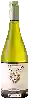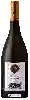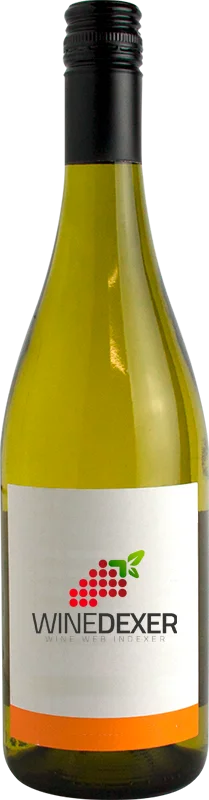
Winery CaliterraTue Winemaker's Selection Sauvignon Blanc
 White wine



In the mouth this white wine is a with a nice freshness.
This wine generally goes well with vegetarian, shellfish or goat cheese.
Taste structure of the Tue Winemaker's Selection Sauvignon Blanc from the Winery Caliterra
Light | Bold | |
Dry | Sweet | |
Soft | Acidic |
In the mouth the Tue Winemaker's Selection Sauvignon Blanc of Winery Caliterra in the region of Central Valley is a with a nice freshness.
Food and wine pairings with Tue Winemaker's Selection Sauvignon Blanc
Pairings that work perfectly with Tue Winemaker's Selection Sauvignon Blanc



Original food and wine pairings with Tue Winemaker's Selection Sauvignon Blanc
The Tue Winemaker's Selection Sauvignon Blanc of Winery Caliterra matches generally quite well with dishes of shellfish, vegetarian or goat cheese such as recipes of carne de porco alentejana (sliced pork with vongoles) recipe..., zucchini quiche or quinoa patties with courgettes and fresh goat cheese.
Details and technical informations about Winery Caliterra's Tue Winemaker's Selection Sauvignon Blanc.
Discover the grape variety: Italia
Intraspecific cross between Bicane and Hamburg Muscat obtained in Italy in 1911 by Luigi and Alberto Pirovano of Vaprio d'Adda, entered in the Official Catalogue of Table Grape Varieties, list A1.
Last vintages of this wine
The best vintages of Tue Winemaker's Selection Sauvignon Blanc from Winery Caliterra are 0
Informations about the Winery Caliterra
The Winery Caliterra is one of of the world's great estates. It offers 50 wines for sale in the of Central Valley to come and discover on site or to buy online.

The wine region of Central Valley
The Central Valley (El Valle Central) of Chile is one of the most important wine-producing areas in South America in terms of Volume. It is also one of the largest wine regions, stretching from the Maipo Valley (just south of Santiago) to the southern end of the Maule Valley. This is a distance of almost 250 miles (400km) and covers a number of Climate types. The Central Valley wine region is easily (and often) confused with the geological Central Valley, which runs north–south for more than 620 miles (1000km) between the Pacific Coastal Ranges and the lower Andes.
The word of the wine: Density per hectare
Number of vines per hectare. For the same yield, a vine planted with 3,000 vines per hectare bears many more bunches (per vine) than a vine planted with 10,000. The grapes will therefore be less rich in sugar and polyphenols (tannins, aromas...).