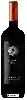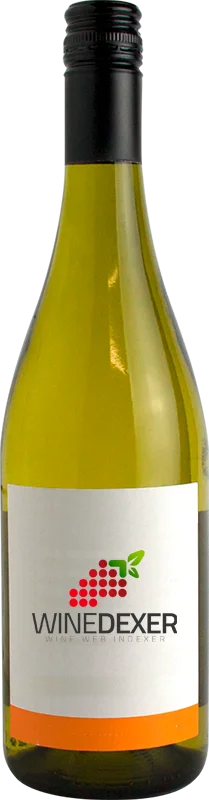
Winery CámbricoSauvignon Blanc
 White wine


In the mouth this white wine is a powerful with a nice freshness.
This wine generally goes well with vegetarian, shellfish or goat cheese.
The Sauvignon Blanc of the Winery Cámbrico is in the top 40 of wines of Central Valley.
Taste structure of the Sauvignon Blanc from the Winery Cámbrico
Light | Bold | |
Dry | Sweet | |
Soft | Acidic |
In the mouth the Sauvignon Blanc of Winery Cámbrico in the region of Central Valley is a powerful with a nice freshness.

Food and wine pairings with Sauvignon Blanc
Pairings that work perfectly with Sauvignon Blanc


Original food and wine pairings with Sauvignon Blanc
The Sauvignon Blanc of Winery Cámbrico matches generally quite well with dishes of shellfish, vegetarian or goat cheese such as recipes of easy seafood gratin, quiche without pastry or goat cheese dumplings.
Details and technical informations about Winery Cámbrico's Sauvignon Blanc.
Discover the grape variety: Periquita
This variety is widely cultivated in Portugal, and is also found in Spain and Argentina. It is virtually unknown in France.
Last vintages of this wine

The best vintages of Sauvignon Blanc from Winery Cámbrico are 2019, 2017, 0, 2018 and 2016.
Informations about the Winery Cámbrico
The Winery Cámbrico is one of of the world's greatest estates. It offers 5 wines for sale in the of Central Valley to come and discover on site or to buy online.

The wine region of Central Valley
The Central Valley (El Valle Central) of Chile is one of the most important wine-producing areas in South America in terms of Volume. It is also one of the largest wine regions, stretching from the Maipo Valley (just south of Santiago) to the southern end of the Maule Valley. This is a distance of almost 250 miles (400km) and covers a number of Climate types. The Central Valley wine region is easily (and often) confused with the geological Central Valley, which runs north–south for more than 620 miles (1000km) between the Pacific Coastal Ranges and the lower Andes.
The word of the wine: Oenologist
Specialist in wine-making techniques. It is a profession and not a passion: one can be an oenophile without being an oenologist (and the opposite too!). Formerly attached to the Faculty of Pharmacy, oenology studies have become independent and have their own university course. Learning to make wine requires a good chemical background but also, increasingly, a good knowledge of the plant. Some oenologists work in laboratories (analysis). Others, the consulting oenologists, work directly in the properties.