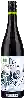
Winery Villa YambolKabile Syrah
 Red wine


This wine generally goes well with beef, lamb or mature and hard cheese.
Wine flavors and olphactive analysis

On the nose the Kabile Syrah of Winery Villa Yambol in the region of Thracian Valley often reveals types of flavors of oak, red fruit or black fruit.
Food and wine pairings with Kabile Syrah
Pairings that work perfectly with Kabile Syrah



Original food and wine pairings with Kabile Syrah

The Kabile Syrah of Winery Villa Yambol matches generally quite well with dishes of beef, lamb or spicy food such as recipes of burger roll, eggplant moussaka with lamb or chicken breast with curry and mushrooms.
Details and technical informations about Winery Villa Yambol's Kabile Syrah.
Discover the grape variety: Queen
Intraspecific crossing obtained in 1954 in the United States by Professor Harold P. Olmo of the University of Davis (California) by crossing the Hamburg Muscat with the Sultana.
Last vintages of this wine
The best vintages of Kabile Syrah from Winery Villa Yambol are 2016, 2015, 0, 2017
Informations about the Winery Villa Yambol
The Winery Villa Yambol is one of of the world's greatest estates. It offers 20 wines for sale in the of Thracian Valley to come and discover on site or to buy online.

The word of the wine: INAO glass
Glass adapted to wine tasting, created in the 1970s by the Institut national des appellations d'origine. At the time, it had the advantage of offering a standardised tool to all tasters. It is characterized by a wide base that allows for good ventilation and a narrow mouth (opening of the glass) to concentrate the aromas. Many high-performance glasses have been created based on this model.