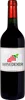
Vignobles SarrailCuvée de la Moubeleine Cabardès
 Red wine
This wine generally goes well with beef, veal or pasta.
The Cuvée de la Moubeleine Cabardès of the Vignobles Sarrail is in the top 50 of wines of Cabardès.
Food and wine pairings with Cuvée de la Moubeleine Cabardès
Pairings that work perfectly with Cuvée de la Moubeleine Cabardès



Original food and wine pairings with Cuvée de la Moubeleine Cabardès
The Cuvée de la Moubeleine Cabardès of Vignobles Sarrail matches generally quite well with dishes of beef, pasta or veal such as recipes of beef pot au feu (grandma's style), pho ga (vietnamese chicken soup) or gizzards in sauce.
Details and technical informations about Vignobles Sarrail's Cuvée de la Moubeleine Cabardès.
Discover the grape variety: Robin noir
Discovered in the 1870s by Mr. Robin, who lived in the Drôme at the time in Lapeyrouse-Mornay, this ancient grape variety is believed to have originated in the north of Isère. It can also be found in Switzerland. According to Thierry Lacombe (I.N.R.A./Montpellier), it is the result of a natural intraspecific crossing between Tressot Noir and Mondeuse Blanche. It should be noted in passing that, on the one hand, it has exactly the same parents as the mondeuse noire, that on the other hand, it is the mother of the diolinoir and, finally, is related to the servanin. Robin noir is not widely propagated today because it is not well known, although it is listed in the Official Catalogue of Wine Grape Varieties, list A1.
Informations about the Vignobles Sarrail
The Vignobles Sarrail is one of of the world's great estates. It offers 31 wines for sale in the of Cabardès to come and discover on site or to buy online.

The wine region of Cabardès
Cabardes is a relatively small appellation for red and rosé wines produced in the hills just North of Carcassonne in Southern France. The appellation was introduced in 1999, to represent and ensure the quality of the wines, which have been produced here since Roman times. The Languedoc-Roussillon/cabards">Cabardès catchment area, situated in the foothills of the Montagne Noire, is on the border between the Languedoc-Roussillon and the South West of France. This dual identity is reflected in the Grape varieties that make up the wines of the appellation: Grenache and Syrah from the south and east of France; Cabernet Franc, Cabernet Sauvignon and Merlot from the southwest and Bordeaux.
The wine region of Languedoc-Roussillon
Languedoc (formerly Coteaux du Languedoc) is a key appellation used in the Languedoc-Roussillon wine region of southern France. It covers Dry table wines of all three colors (red, white and rosé) from the entire region, but leaves Sweet and Sparkling wines to other more specialized appellations. About 75% of all Languedoc wines are red, with the remaining 25% split roughly down the middle between whites and rosés. The appellation covers most of the Languedoc region and almost a third of all the vineyards in France.
The word of the wine: Overmaturation
When the grapes reach maturity, the skin becomes permeable and progressively loses water, which causes a concentration phenomenon inside the berry. This is called over-ripening or passerillage.