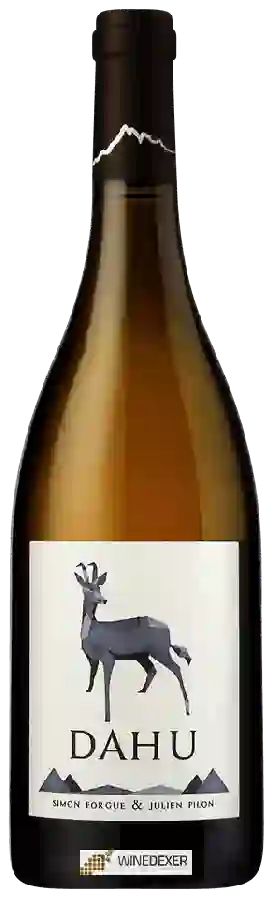
Vignobles de PyrenaiaSimon Forgue & Julien Pilon Dahu
 White wine



This wine is a blend of 2 varietals which are the Petit Manseng and the Viognier.
This wine generally goes well with pork, poultry or game (deer, venison).

Wine flavors and olphactive analysis


On the nose the Simon Forgue & Julien Pilon Dahu of Vignobles de Pyrenaia in the region of Vin de France often reveals types of flavors of citrus, apples or apricot and sometimes also flavors of earth, tree fruit or citrus fruit.
Food and wine pairings with Simon Forgue & Julien Pilon Dahu
Pairings that work perfectly with Simon Forgue & Julien Pilon Dahu



Original food and wine pairings with Simon Forgue & Julien Pilon Dahu


The Simon Forgue & Julien Pilon Dahu of Vignobles de Pyrenaia matches generally quite well with dishes of pork, game (deer, venison) or shellfish such as recipes of stuffed artichoke, duck leg confit in white wine or seafood risotto.
Details and technical informations about Vignobles de Pyrenaia's Simon Forgue & Julien Pilon Dahu.
Discover the grape variety: Petit Manseng
Exceptional sweet wines obtained by on-vine drying, with an unctuous mouth balanced by cutting acidity, featuring intense aromas of candied pineapple, mango, candied citrus, dried apricot, honey, dried fruits and sweet spice notes. Very high ageing potential. Star of Jurançon moelleux AOC and Pacherenc du Vic-Bilh AOC, also made as ambitious dry wines. Very late-ripening native grape of Béarn (South-West France).
Last vintages of this wine
The best vintages of Simon Forgue & Julien Pilon Dahu from Vignobles de Pyrenaia are 2017, 2016, 2014, 2015
Informations about the Vignobles de Pyrenaia
The Vignobles de Pyrenaia is one of of the world's greatest estates. It offers 11 wines for sale in the of Vin de France to come and discover on site or to buy online.

The wine region of Vin de France
The freest category of French wine, the playground of winemakers working outside the AOC. All styles combined: fruity reds, lively or ambitious whites, everyday rosés, unusual blends, natural wines, atypical grapes (Petit Manseng in Languedoc, Riesling in Provence), experimental winemaking (skin-contact whites, no sulphur). Grape and vintage labelling allowed, no geographic constraint. From the pop, convivial cuvée to the artisan gem: freedom in a bottle.
The word of the wine: Turbidity
The state of a cloudy wine, due to the presence of colloidal suspensions that prevent the passage of light.