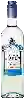
Winery MundusBlanco
 White wine


In the mouth this white wine is a with a nice freshness.
This wine generally goes well with appetizers and snacks, lean fish or shellfish.
Taste structure of the Blanco from the Winery Mundus
Light | Bold | |
Dry | Sweet | |
Soft | Acidic |
In the mouth the Blanco of Winery Mundus in the region of Lisboa is a with a nice freshness.
Food and wine pairings with Blanco
Pairings that work perfectly with Blanco



Original food and wine pairings with Blanco

The Blanco of Winery Mundus matches generally quite well with dishes of shellfish, appetizers and snacks or lean fish such as recipes of mussels with white wine and tomato, tomato tartar or microwave quick fish fillets.
Details and technical informations about Winery Mundus's Blanco.
Discover the grape variety: Muscadelle
Muscadelle white is a grape variety that originated in France (Bergerac). It produces a variety of grape specially used for wine making. It is rare to find this grape to eat on our tables. This variety of grape is characterized by bunches of medium size, and grapes of medium caliber. Muscadelle white can be found in several vineyards: South-West, Cognac, Bordeaux, Armagnac, Provence & Corsica, Rhone valley, Loire valley, Savoie & Bugey, Beaujolais, Languedoc & Roussillon.
Last vintages of this wine

The best vintages of Blanco from Winery Mundus are 2015, 0, 2014
Informations about the Winery Mundus
The Winery Mundus is one of of the world's great estates. It offers 48 wines for sale in the of Lisboa to come and discover on site or to buy online.

The wine region of Lisboa
Lisboa (formerly Estremadura) is a prolific wine region located at the Center of Portugal's Atlantic coast. Despite being one of the country's most productive winemaking areas, its name remains relatively obscure in wine terms, as its wines have traditionally been labeled with the names of the local sub-regions, which include Alenquer, Bucelas and Colares. The region is also home to Portugal's capital, Lisbon. The region fell under the VR (Vinho Regional) classification until 2008, when the category was renamed IGP (Indicaciones Geográficas Protegidas) to bring it into line with the rest of Europe.
The word of the wine: Licking
Operation consisting in sanitizing a barrel by introducing a wick of ignited sulphur which produces a release of sulphurous gas.