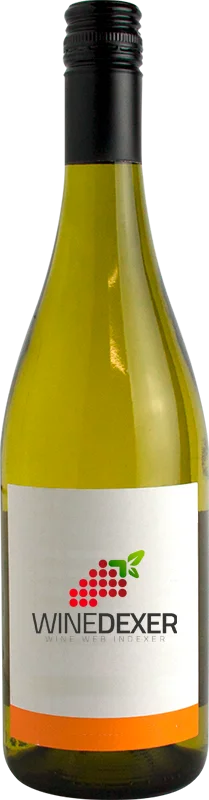
Winery Valle HermosoPinot Grigio
 White wine


This wine generally goes well with poultry, veal or shellfish.
Food and wine pairings with Pinot Grigio
Pairings that work perfectly with Pinot Grigio



Original food and wine pairings with Pinot Grigio
The Pinot Grigio of Winery Valle Hermoso matches generally quite well with dishes of veal, shellfish or poultry such as recipes of gigolette of rabbit, festive sea pot or cannelloni of meat.
Details and technical informations about Winery Valle Hermoso's Pinot Grigio.
Discover the grape variety: Nebbiolo
A very old grape variety grown in the Italian Piedmont. It has a great resemblance with the Freisa, which also comes from the same Italian region. Among the various massal selections made in Italy, we find lampia, michet and rosé. It can be found in Italy, Austria, Bulgaria, Cyprus, Greece, Mexico, the United States (California), Australia, etc. In France, it is practically unknown, perhaps because it is a delicate and demanding grape variety with, among other things, a fairly long phenological cycle.
Last vintages of this wine
The best vintages of Pinot Grigio from Winery Valle Hermoso are 0, 2020
Informations about the Winery Valle Hermoso
The Winery Valle Hermoso is one of of the world's great estates. It offers 25 wines for sale in the of Central Valley to come and discover on site or to buy online.

The wine region of Central Valley
The Central Valley (El Valle Central) of Chile is one of the most important wine-producing areas in South America in terms of Volume. It is also one of the largest wine regions, stretching from the Maipo Valley (just south of Santiago) to the southern end of the Maule Valley. This is a distance of almost 250 miles (400km) and covers a number of Climate types. The Central Valley wine region is easily (and often) confused with the geological Central Valley, which runs north–south for more than 620 miles (1000km) between the Pacific Coastal Ranges and the lower Andes.
The word of the wine: Rootstock
American vine on which a French vine is grafted. This is the consequence of the phylloxera that destroyed the vineyard at the end of the 19th century: after much trial and error, it was discovered that the "pest" spared the roots of the American vines, and the technique became widespread.