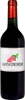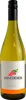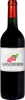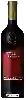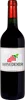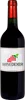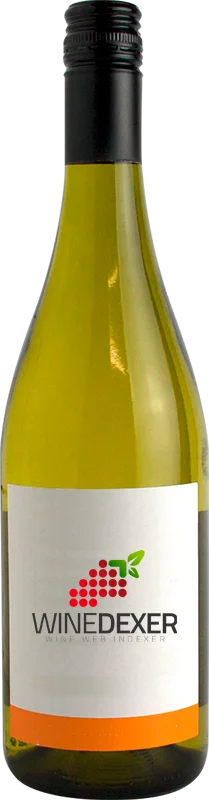
Winery TrianiCantini Blanco
 White wine


In the mouth this white wine is a with a nice freshness.
This wine generally goes well with vegetarian, appetizers and snacks or lean fish.
Taste structure of the Cantini Blanco from the Winery Triani
Light | Bold | |
Dry | Sweet | |
Soft | Acidic |
In the mouth the Cantini Blanco of Winery Triani in the region of Abruzzo is a with a nice freshness.
Food and wine pairings with Cantini Blanco
Pairings that work perfectly with Cantini Blanco



Original food and wine pairings with Cantini Blanco


The Cantini Blanco of Winery Triani matches generally quite well with dishes of pasta, vegetarian or appetizers and snacks such as recipes of pasta with walnuts and treviso red salad, mushroom, bacon and gruyere quiche or salted muffins with bacon and grated cheese.
Details and technical informations about Winery Triani's Cantini Blanco.
Discover the grape variety: Panse de Provence
Most certainly of oriental origin, introduced in Spain then spread in France, in Italy, in North Africa... more generally on all the Mediterranean basin. It can also be found in the United States, Thailand, ... and in many other countries. It should not be confused with the early or Sicilian pansy at first maturity.
Last vintages of this wine
The best vintages of Cantini Blanco from Winery Triani are 0
Informations about the Winery Triani
The Winery Triani is one of of the world's greatest estates. It offers 10 wines for sale in the of Abruzzo to come and discover on site or to buy online.

The wine region of Abruzzo
Abruzzo is an Italian wine region located on the eastern (Adriatic) coast. Its immediate neighbors in CentralItaly are Marche to the North, Lazio to the west and southwest and Molise to the southeast. Abruzzo has one DOCG - Montepulciano d'Abruzzo Colline Teramane - and three DOC wine appellations. The reds and Cerasuolo d'Abruzzo and Montepulciano d'Abruzzo, as well as the white wine appellation Trebbiano d'Abruzzo are the most notable, followed by the lesser-known Controguerra.
The word of the wine: Broker
In the past, he was a sort of fraud control agent who had to watch over the quality of merchant wines (he could carry a sword!). His function has evolved towards expertise (it was the brokers who established the famous 1855 classification in Bordeaux) and today he puts the producer in contact with the merchant.