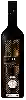
Winery Torre OriaLittle Tinta Hood
 Red wine


This wine is a blend of 2 varietals which are the Bobal and the Tempranillo.
In the mouth this red wine is a powerful.
This wine generally goes well with poultry, beef or veal.
Taste structure of the Little Tinta Hood from the Winery Torre Oria
Light | Bold | |
Smooth | Tannic | |
Dry | Sweet | |
Soft | Acidic |
In the mouth the Little Tinta Hood of Winery Torre Oria in the region of Valence is a powerful.
Food and wine pairings with Little Tinta Hood
Pairings that work perfectly with Little Tinta Hood



Original food and wine pairings with Little Tinta Hood

The Little Tinta Hood of Winery Torre Oria matches generally quite well with dishes of beef, pasta or veal such as recipes of savoyard matafans, spaghetti with knackis or express veal stew in a pressure cooker.
Details and technical informations about Winery Torre Oria's Little Tinta Hood.
Discover the grape variety: Bobal
This grape variety is widely cultivated in Spain under the name béni carlo. It was introduced into the Languedoc-Roussillon region of Narbonne around 1870.
Last vintages of this wine
The best vintages of Little Tinta Hood from Winery Torre Oria are 0, 2016
Informations about the Winery Torre Oria
The Winery Torre Oria is one of of the world's great estates. It offers 92 wines for sale in the of Valence to come and discover on site or to buy online.

The wine region of Valence
Valencia is a province in the centre of Spain's sunny east coast, perhaps better known for its oranges (and paella) than its wine. The administrative Center of Valencia is the city of the same name, the third largest in Spain and the largest port on the Mediterranean. Archaeological evidence suggests that wine making in Valencia dates back more than a thousand years, but the region has never been particularly prominent on the world wine map. In modern times, Valencia's wine production has focused on quantity rather than quality, although this is gradually changing.
The word of the wine: Malolactic fermentation
Called second fermentation or malo for short. It is the degradation (under the effect of bacteria) of the malic acid naturally present in the wine into milder, less aggressive lactic acid. Some producers or wineries refuse this operation by "blocking the malo" (by cold and adding SO2) to keep a maximum of acidity which carries the aromas and accentuates the sensation of freshness.