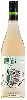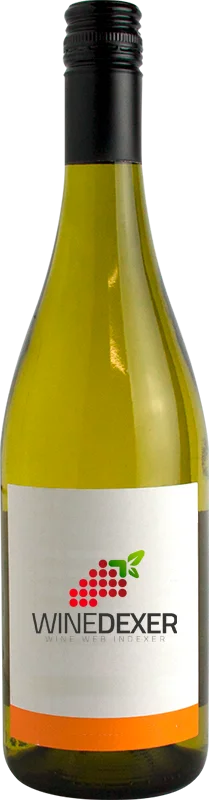
Winery TodoroffBoutique Rainbow Green
 White wine


This wine generally goes well with vegetarian, rich fish (salmon, tuna etc) or shellfish.
Food and wine pairings with Boutique Rainbow Green
Pairings that work perfectly with Boutique Rainbow Green



Original food and wine pairings with Boutique Rainbow Green


The Boutique Rainbow Green of Winery Todoroff matches generally quite well with dishes of rich fish (salmon, tuna etc), shellfish or spicy food such as recipes of baked salmon mediterranean style, monkfish in foil or salmon steak on a bed of leeks.
Details and technical informations about Winery Todoroff's Boutique Rainbow Green.
Discover the grape variety: Tannat
Tannat is a red grape variety from Béarn which belongs to the cotoïdes family. Present in several vineyards of France, it occupies nearly 3,000 ha. Its leaves are reddish with tan patches. Its bunches are either of normal size or larger. Its berries have a thin skin and are rounded. Its foliage has a swarthy appearance. This variety must be pruned long because it is vigorous. It likes sandy and gravelly soils. Tannat is often exposed to leafhoppers and mites. It is also somewhat susceptible to grey rot. It has 11 approved clones, including 474, 717 and 794. Once mature, this variety produces acidic, fruity, tannic, acidic and full-bodied wines. Various aromas emerge, notably tobacco, cinnamon and exotic wood. Tannat is rarely used alone. It is combined with iron-servadou to obtain a fruitier taste or with cabernet sauvignon to be more rounded.
Last vintages of this wine
The best vintages of Boutique Rainbow Green from Winery Todoroff are 0
Informations about the Winery Todoroff
The Winery Todoroff is one of of the world's great estates. It offers 24 wines for sale in the of Thracian Valley to come and discover on site or to buy online.

The word of the wine: Chaptalization
The addition of sugar at the time of fermentation of the must, an ancient practice, but theorized by Jean-Antoine Chaptal at the dawn of the 19th century. The sugar is transformed into alcohol and allows the natural degree of the wine to be raised in a weak or cold year, or - more questionably - when the winegrower has a harvest that is too large to obtain good maturity.