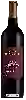
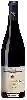
Winery Thierry NavarreLe Laouzil Saint-Chinian
 Red wine



In the mouth this red wine is a powerful with a nice balance between acidity and tannins.
This wine generally goes well with beef, veal or pasta.
Taste structure of the Le Laouzil Saint-Chinian from the Winery Thierry Navarre
Light | Bold | |
Smooth | Tannic | |
Dry | Sweet | |
Soft | Acidic |
In the mouth the Le Laouzil Saint-Chinian of Winery Thierry Navarre in the region of Languedoc-Roussillon is a powerful with a nice balance between acidity and tannins.
Wine flavors and olphactive analysis




On the nose the Le Laouzil Saint-Chinian of Winery Thierry Navarre in the region of Languedoc-Roussillon often reveals types of flavors of earthy, blueberry or tobacco and sometimes also flavors of plum, black fruits or black currant.
Food and wine pairings with Le Laouzil Saint-Chinian
Pairings that work perfectly with Le Laouzil Saint-Chinian



Original food and wine pairings with Le Laouzil Saint-Chinian
The Le Laouzil Saint-Chinian of Winery Thierry Navarre matches generally quite well with dishes of beef, pasta or veal such as recipes of piglet shoulder with melting baked apples, pasta with broccoli or veal tagine with preserved lemons and saffron.
Details and technical informations about Winery Thierry Navarre's Le Laouzil Saint-Chinian.
Discover the grape variety: Counoise
Counoise is a black grape variety of Spanish origin. It is widely cultivated in the southern part of France. It is very similar to the aubun, with which it is often confused, and has a white cottony bud. Unlike the aubun, the leaves of this variety do not have teeth in the petiolar sinus. They are thick and large. Its bunches are medium-sized but its berries are large. It is advisable to prune it short so that it is productive. It matures in the second half of the year, but production depends on the vintage. This grape variety appreciates hillside terroirs, which are stony and warm. It fears grey rot without being sensitive to oidium and mildew. Counoise has two approved clones, 508 and 725. The wine obtained from Counoise is not very colourful. It is fine and fruity. Its aromas are diversified with notes of fruit, flowers and spices.
Last vintages of this wine
The best vintages of Le Laouzil Saint-Chinian from Winery Thierry Navarre are 2016, 2013, 2017, 2014 and 2012.
Informations about the Winery Thierry Navarre
The Winery Thierry Navarre is one of of the world's greatest estates. It offers 9 wines for sale in the of Saint-Chinian to come and discover on site or to buy online.

The wine region of Saint-Chinian
Saint-Chinian is an appellation in the Languedoc-roussillon">Languedoc-Roussillon wine region of southern France. It is located between Minervois and Faugeres, which produce similar styles of robust red wine from similar grapes and in a similar landscape. It is also adjacent to the Muscat de Saint-Jean-de-Minervois appellation, which produces Sweet white wines. Therefore, the diversity of the Languedoc region is well demonstrated in this small area.
The wine region of Languedoc-Roussillon
Languedoc (formerly Coteaux du Languedoc) is a key appellation used in the Languedoc-Roussillon wine region of southern France. It covers Dry table wines of all three colors (red, white and rosé) from the entire region, but leaves Sweet and Sparkling wines to other more specialized appellations. About 75% of all Languedoc wines are red, with the remaining 25% split roughly down the middle between whites and rosés. The appellation covers most of the Languedoc region and almost a third of all the vineyards in France.
The word of the wine: Tanin
A natural compound contained in the skin of the grape, the seed or the woody part of the bunch, the stalk. The maceration of red wines allows the extraction of tannins, which give the texture, the solidity and also the mellowness when the tannins are "ripe". The winemaker seeks above all to extract the tannins from the skin, the ripest and most noble. The tannins of the seed or stalk, which are "greener", especially in average years, give the wine hardness and astringency. The wines of Bordeaux (based on Cabernet and Merlot) are full of tannins, those of Burgundy much less so, with Pinot Noir containing little.