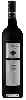
Winery The PoplarsReserve Release Shiraz
 Red wine


In the mouth this red wine is a powerful with a lot of tannins present in the mouth.
This wine generally goes well with poultry, beef or game (deer, venison).
Taste structure of the Reserve Release Shiraz from the Winery The Poplars
Light | Bold | |
Smooth | Tannic | |
Dry | Sweet | |
Soft | Acidic |
In the mouth the Reserve Release Shiraz of Winery The Poplars in the region of Australie du Sud is a powerful with a lot of tannins present in the mouth.
Food and wine pairings with Reserve Release Shiraz
Pairings that work perfectly with Reserve Release Shiraz



Original food and wine pairings with Reserve Release Shiraz

The Reserve Release Shiraz of Winery The Poplars matches generally quite well with dishes of beef, lamb or game (deer, venison) such as recipes of beef marengo "my mom" style, lamb tagine with broad beans or roast duck with cider sauce.
Details and technical informations about Winery The Poplars's Reserve Release Shiraz.
Discover the grape variety: Baco noir
It is the only vinifera-riparia that has been commercialized. It is the result of crossing the folle blanche with the riparia grand glabre created in 1902 by François Baco. Depending on the region, we can still find some small plots of black Baco vines often mixed with other varieties. You will also find trellises or arbors installed a long time ago in front of old houses and still maintained in a more than remarkable way thanks to the great vigour of this variety. It should be noted that there is also a white baco resulting from the crossing of the folle blanche by the noah and resembling much the latter.
Last vintages of this wine
The best vintages of Reserve Release Shiraz from Winery The Poplars are 2006, 0
Informations about the Winery The Poplars
The Winery The Poplars is one of of the world's greatest estates. It offers 5 wines for sale in the of Limestone Coast to come and discover on site or to buy online.

The wine region of Limestone Coast
The Limestone Coast GI (Geographical Indication) in SouthAustralia is located in the southeast corner of the state, bordering Victoria in the east. It is one of the most significant region of the country, producing nearly one-third of South Australia's quality wines – some of which are the most highly acclaimed in Australia. The zone is regarded as geologically unique and the feature responsible for producing such high-quality wines is its soil. As the name suggests, limestone forms the basis of the soil here, best represented by the famous 'terra rossa' of Coonawarra.
The wine region of Australie du Sud
SouthAustralia is one of Australia's six states, located (as the name suggests) in the south of the vast island continent. It's the engine room of the Australian wine industry, responsible for about half of the country's total production each year. But there's more to the region than quantity - countless high-quality wines are produced here, most from the region's signature Grape, Shiraz. These include such fine, collectible wines as Penfolds Grange, Henschke Hill of Grace, Torbreck The Laird and d'Arenberg The Dead Arm.
The word of the wine: Trader-Handler
Champagne term for a merchant who buys grapes to make a Champagne wine himself.