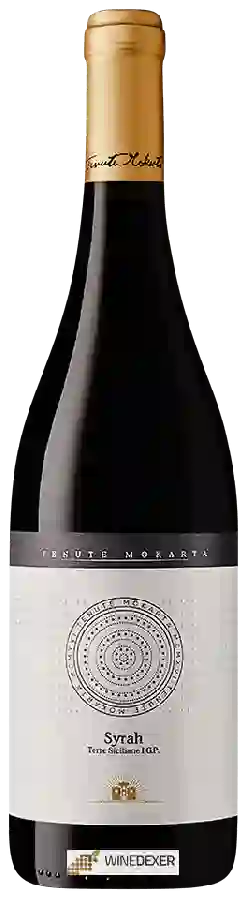
Winery Tenute MokartaSyrah
 Red wine



In the mouth this red wine is a powerful with a lot of tannins present in the mouth.
This wine generally goes well with beef, lamb or pasta.

Taste structure of the Syrah from the Winery Tenute Mokarta
Light | Bold | |
Smooth | Tannic | |
Dry | Sweet | |
Soft | Acidic |
In the mouth the Syrah of Winery Tenute Mokarta in the region of Sicily is a powerful with a lot of tannins present in the mouth.
Food and wine pairings with Syrah
Pairings that work perfectly with Syrah



Original food and wine pairings with Syrah
The Syrah of Winery Tenute Mokarta matches generally quite well with dishes of beef, pasta or lamb such as recipes of cabri en colombo with creole sauce, pipe rigate bolognese sauce or shoulder of lamb with a spoon.
Details and technical informations about Winery Tenute Mokarta's Syrah.
Discover the grape variety: Corbeau
Structured and fresh reds with a deep purple hue, firm tannins and an ample palate with preserved acidity, featuring signature aromas of red fruits (cherry), spices and fresh alpine notes. Moderate ageing potential. Grown in small quantities in Savoy and the Aosta Valley, it contributes to the AOC Vin de Savoie and crafts artisanal altitude cuvées. Autochthonous black Savoyard grape (also called Charbonneau), identical to the Douce Noire of the Aosta Valley.
Last vintages of this wine
The best vintages of Syrah from Winery Tenute Mokarta are 2015, 0
Informations about the Winery Tenute Mokarta
The Winery Tenute Mokarta is one of of the world's greatest estates. It offers 20 wines for sale in the of Sicily to come and discover on site or to buy online.

The wine region of Sicily
Major qualitative renewal. Sunny, expressive reds: fleshy, spicy Nero d'Avola (black cherry, blackberry, liquorice), fine, mineral Nerello Mascalese on Etna (recalls Pinot Noir), light, crisp Frappato in Cerasuolo di Vittoria DOCG. Lively, saline whites: Catarratto, fat, iodised Grillo, taut Carricante, floral Inzolia. Amber, walnutty fortified Marsala.
The word of the wine: Stirring
In the traditional method, the operation aims to bring the deposits against the cork by the movement of the bottles placed on desks. The stirring can be manual or mechanical (using gyropalettes).