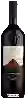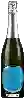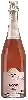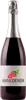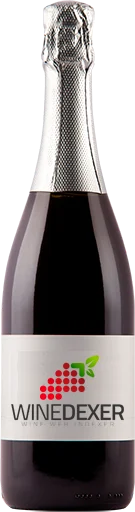
Winery Tenuta Sant’Anna (S. Anna)Moscato Spumante del Tipo Aromatico
 Sparkling wine



This wine generally goes well with sweet desserts
Food and wine pairings with Moscato Spumante del Tipo Aromatico
Pairings that work perfectly with Moscato Spumante del Tipo Aromatico

Original food and wine pairings with Moscato Spumante del Tipo Aromatico
The Moscato Spumante del Tipo Aromatico of Winery Tenuta Sant’Anna (S. Anna) matches generally quite well with dishes of sweet desserts such as recipes of apple cake.
Details and technical informations about Winery Tenuta Sant’Anna (S. Anna)'s Moscato Spumante del Tipo Aromatico.
Discover the grape variety: Pineau d'Aunis
The wines produced in the Vendôme region are of excellent quality thanks to an exceptional grape variety: pineau d'aunis. For example, the red wines of the region, with their aromas of ripe red fruit and sweet spices, are a blend of Pineau d'Aunis, Cabernet Franc and Pinot Noir. The Vendôme hillsides are less than 200 km southwest of Paris. Pineau d'Aunis, a vigorous black grape variety, was first cultivated in the 9th century. It is characterized by a late budburst. Moreover, its foliage partially reddens in autumn. Although it is difficult to grow, Pineau d'Aunis is a high-yielding grape variety, producing between 40 and 80 hectolitres per hectare. It produces a wine with low alcohol content, supple, light-coloured and very aromatic. The "Pineau d'Aunis" grape variety is used as a single variety for the production of Coteaux du Vendômois. On the other hand, it is used in blends for Anjou, Rosé d'Anjou, Crémant de vallée de la Loire, Rosé de vallée de la Loire, Saumur, Saumur Champigny, Coteaux du Loir and Touraine. Finally, it is an accessory grape variety for Valençay.
Last vintages of this wine
The best vintages of Moscato Spumante del Tipo Aromatico from Winery Tenuta Sant’Anna (S. Anna) are 0
Informations about the Winery Tenuta Sant’Anna (S. Anna)
The Winery Tenuta Sant’Anna (S. Anna) is one of of the world's great estates. It offers 74 wines for sale in the of Veneto to come and discover on site or to buy online.

The wine region of Veneto
Veneto is an important and growing wine region in northeastern Italy. Veneto is administratively Part of the Triveneto area, aLong with its smaller neighbors, Trentino-Alto Adige and Friuli-Venezia Giulia. In terms of geography, culture and wine styles, it represents a transition from the Alpine and Germanic-Slavic end of Italy to the warmer, drier, more Roman lands to the South. Veneto is slightly smaller than the other major Italian wine regions - Piedmont, Tuscany, Lombardy, Puglia and Sicily - but it produces more wine than any of them.
The word of the wine: Bordeaux futures
Bordeaux wines are expected 2 to 3 years before bottling. In the spring following the harvest, the wines are offered by the châteaux to the Bordeaux wine merchants via the brokers.