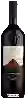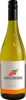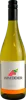
Winery Tenuta GuidaSauvignon
 White wine
In the mouth this white wine is a powerful.
This wine generally goes well with lean fish, shellfish or mature and hard cheese.
Taste structure of the Sauvignon from the Winery Tenuta Guida
Light | Bold | |
Dry | Sweet | |
Soft | Acidic |
In the mouth the Sauvignon of Winery Tenuta Guida in the region of Veneto is a powerful.
Food and wine pairings with Sauvignon
Pairings that work perfectly with Sauvignon



Original food and wine pairings with Sauvignon


The Sauvignon of Winery Tenuta Guida matches generally quite well with dishes of pasta, shellfish or mature and hard cheese such as recipes of spinach cannelloni, fish shells or mushroom, comté and morteau sausage cake.
Details and technical informations about Winery Tenuta Guida's Sauvignon.
Discover the grape variety: Datal
Intraspecific crossing obtained in 1956 between the Beirut date palm and the Alexandria muscatel. This variety is not widely cultivated in France, although it is registered in the Official Catalogue of table grape varieties, list A1. It can be found in South Africa, Portugal, etc.
Informations about the Winery Tenuta Guida
The Winery Tenuta Guida is one of of the world's greatest estates. It offers 22 wines for sale in the of Veneto to come and discover on site or to buy online.

The wine region of Veneto
Veneto is an important and growing wine region in northeastern Italy. Veneto is administratively Part of the Triveneto area, aLong with its smaller neighbors, Trentino-Alto Adige and Friuli-Venezia Giulia. In terms of geography, culture and wine styles, it represents a transition from the Alpine and Germanic-Slavic end of Italy to the warmer, drier, more Roman lands to the South. Veneto is slightly smaller than the other major Italian wine regions - Piedmont, Tuscany, Lombardy, Puglia and Sicily - but it produces more wine than any of them.
The word of the wine: Performance
Quantity of grapes harvested per hectare. In AOC, the average yield is limited on the proposal of the appellation syndicate, validated by the Inao. The use of high-performance plant material (especially clones) and better control of vine diseases have increased yields. This is not without consequences on the quality of the wines (dilution) and on the state of the market (too much wine). We must not over-simplify: low yields are not synonymous with quality, and it is often in years with generous harvests that we find the greatest vintages (1982 and 1986 in Bordeaux, 1996 in Champagne, 1990 and 2005 in Burgundy...).