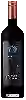
Winery Tenuta di MontecuccoCanaiolo
 Red wine



In the mouth this red wine is a powerful with a nice balance between acidity and tannins.
This wine generally goes well with poultry, beef or veal.
Taste structure of the Canaiolo from the Winery Tenuta di Montecucco
Light | Bold | |
Smooth | Tannic | |
Dry | Sweet | |
Soft | Acidic |
In the mouth the Canaiolo of Winery Tenuta di Montecucco in the region of Tuscany is a powerful with a nice balance between acidity and tannins.
Wine flavors and olphactive analysis

Food and wine pairings with Canaiolo
Pairings that work perfectly with Canaiolo



Original food and wine pairings with Canaiolo


The Canaiolo of Winery Tenuta di Montecucco matches generally quite well with dishes of beef, lamb or veal such as recipes of rosbeef casserole mamie, sauté of lamb or roast veal with black olives.
Details and technical informations about Winery Tenuta di Montecucco's Canaiolo.
Discover the grape variety: Dauphine
A natural intraspecific cross between the ohanès and the Beirut date tree - also called afuz ali - obtained in South Africa and multiplied since 1983 by the Institute of Viticultural and Enological Research of Stellenbosch. Almost unknown in the rest of the wine world, it can however be found in Portugal, ... .
Last vintages of this wine
The best vintages of Canaiolo from Winery Tenuta di Montecucco are 2011, 2018, 2016, 2012 and 2017.
Informations about the Winery Tenuta di Montecucco
The Winery Tenuta di Montecucco is one of of the world's greatest estates. It offers 13 wines for sale in the of Tuscany to come and discover on site or to buy online.

The wine region of Tuscany
Tuscany is one of the most famous and prolific wine regions in Europe. It is best known for its Dry red wines made from Sangiovese grapes, which dominate production. These include Chianti, Brunello di Montalcino and Vino Nobile di Montepulciano. The region's Vin Santo is also highly prized, as are its passito dessert wines, though these are produced in comparatively tiny quantities.
The word of the wine: Sulphur
An antiseptic and antioxidant substance known since antiquity, probably already used by the Romans. But it was only in modern times that its use was rediscovered. It will allow a better conservation of the wine and thus favour its export. Sulphur also gave the 18th century winegrower the possibility of extending the maceration period without fearing that the wine would turn sour and thus go from dark rosé wines to the red wines of today. Excessive sulphur, on the other hand, kills happiness, paralysing the aromas and causing headaches.