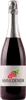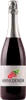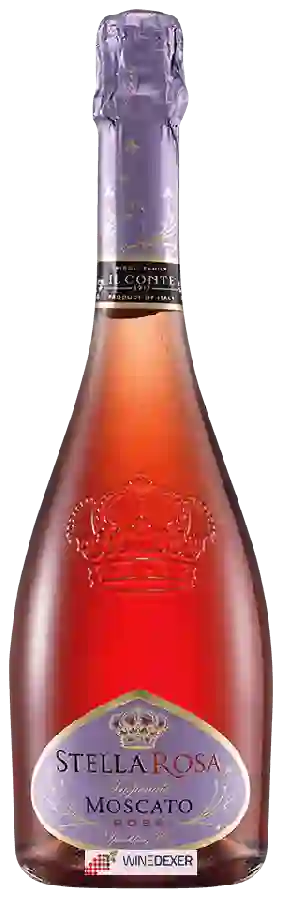
Winery Stella RosaImperiale Moscato Rosé
 Sparkling wine


This wine generally goes well with sweet desserts

Wine flavors and olphactive analysis

On the nose the Imperiale Moscato Rosé of Winery Stella Rosa in the region of Piedmont often reveals types of flavors of tree fruit, red fruit or tropical fruit.
Food and wine pairings with Imperiale Moscato Rosé
Pairings that work perfectly with Imperiale Moscato Rosé

Original food and wine pairings with Imperiale Moscato Rosé
The Imperiale Moscato Rosé of Winery Stella Rosa matches generally quite well with dishes of sweet desserts such as recipes of chocolate mousse.
Details and technical informations about Winery Stella Rosa's Imperiale Moscato Rosé.
Discover the grape variety: Mandó
Supple, fruity reds with a clear ruby robe, silky tannins and an airy palate, with signature aromas of red fruits (cherry, raspberry), Mediterranean herbs (thyme, rosemary) and Levantine garrigue notes. A rustic, airy, near-extinct profile. Preserved for its heritage value, it is among the Levantine native grapes under study. Near-extinct native Spanish black grape from Valencia and Alicante.
Last vintages of this wine

The best vintages of Imperiale Moscato Rosé from Winery Stella Rosa are 1917, 0, 2008
Informations about the Winery Stella Rosa
The Winery Stella Rosa is one of of the world's greatest estates. It offers 40 wines for sale in the of Piedmont to come and discover on site or to buy online.

The wine region of Piedmont
Kingdom of Nebbiolo: Barolo and Barbaresco DOCG, long-ageing reds with firm tannins and lively acidity, complex aromas of withered rose, sour cherry, tar, truffle and undergrowth. More accessible, tangy Barbera on red fruit, supple, crisp Dolcetto. Sweet, floral sparkling Moscato d'Asti, mineral, lemony Gavi (Cortese) white, round, almondy Arneis from Roero. 50,000 ha across the Langhe, Roero and Monferrato, UNESCO.
The word of the wine: Generic
A term that can have several meanings, but often designates a branded wine as opposed to a wine from a vineyard or château, sometimes abused to designate regional appellations (e.g. Bordeaux, Burgundy, etc.).