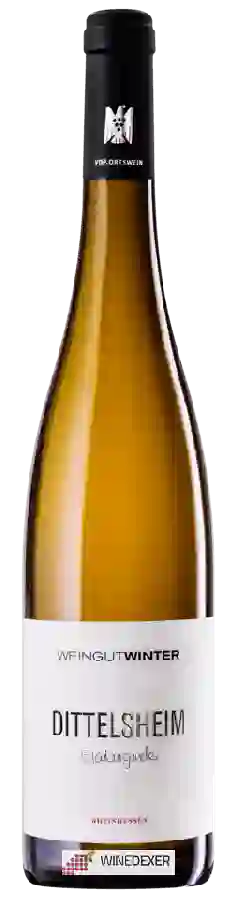
Winery Stefan WinterDittelsheim Grauburgunder
 White wine


In the mouth this white wine is a .
This wine generally goes well with pork, cured meat or mushrooms.

Taste structure of the Dittelsheim Grauburgunder from the Winery Stefan Winter
Light | Bold | |
Dry | Sweet | |
Soft | Acidic |
In the mouth the Dittelsheim Grauburgunder of Winery Stefan Winter in the region of Rheinhessen is a .
Food and wine pairings with Dittelsheim Grauburgunder
Pairings that work perfectly with Dittelsheim Grauburgunder


Original food and wine pairings with Dittelsheim Grauburgunder

The Dittelsheim Grauburgunder of Winery Stefan Winter matches generally quite well with dishes of pork, spicy food or mushrooms such as recipes of traditional welsh dark beer, panga curry or pork tenderloin with fresh cream.
Details and technical informations about Winery Stefan Winter's Dittelsheim Grauburgunder.
Discover the grape variety: Blanc vert
Simple, fresh dry whites with a pale golden robe with green reflections, a supple palate with moderate acidity on undemonstrative citrus and white flower aromas. Rustic profile. Almost extinct, preserved in INRAE ampelographic collections, it belongs to the ancient varieties with patrimonial value whose commercial diffusion has disappeared and which are studied for their genetic interest. French autochthonous white variety, formerly grown in the South-West and Languedoc.
Last vintages of this wine

The best vintages of Dittelsheim Grauburgunder from Winery Stefan Winter are 0, 2016
Informations about the Winery Stefan Winter
The Winery Stefan Winter is one of of the world's great estates. It offers 76 wines for sale in the of Rheinhessen to come and discover on site or to buy online.

The wine region of Rheinhessen
71% white region: Riesling is king (5,000 ha), dry to off-dry, ripe yellow fruit, apple, citrus and fine saline minerality. Supple, floral Müller-Thurgau for everyday, the world's largest Silvaner plantation with herbaceous, straight notes. Historic cradle of off-sweet Liebfraumilch. Some supple reds (Dornfelder, Spätburgunder).
The word of the wine: Ancestral method
A method of making certain sparkling wines such as blanquette de Limoux, sparkling gaillac or clairette de Die, which consists of a second fermentation in the bottle based on natural sugars and yeasts naturally brought by the grapes (unlike the méthode champenoise, which requires the addition of tirage liquor).