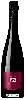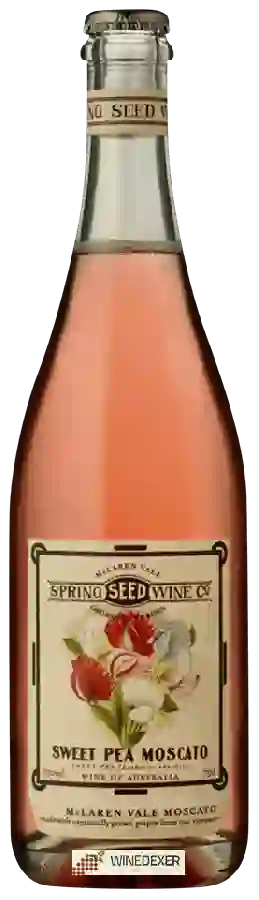
Winery Spring SeedSweet Pea Moscato
 Sparkling wine


This wine generally goes well with sweet desserts

Wine flavors and olphactive analysis


On the nose the Sweet Pea Moscato of Winery Spring Seed in the region of Australie du Sud often reveals types of flavors of tree fruit.
Food and wine pairings with Sweet Pea Moscato
Pairings that work perfectly with Sweet Pea Moscato

Original food and wine pairings with Sweet Pea Moscato
The Sweet Pea Moscato of Winery Spring Seed matches generally quite well with dishes of sweet desserts such as recipes of quick chocolate fudge cake.
Details and technical informations about Winery Spring Seed's Sweet Pea Moscato.
Discover the grape variety: Bouchalès
Light and fruity reds with a clear ruby robe, barely noticeable tannins and a supple palate, with simple aromas of red fruits (cherry, raspberry, strawberry), soft spices and floral notes. A rustic airy profile to drink young. Often blended with Abouriou, Merlot and Cabernet Franc, it contributes to the AOC Côtes-du-Marmandais reds and reflects the South-West heritage. Native French black grape from the South-West (Côtes-du-Marmandais, Buzet).
Last vintages of this wine
The best vintages of Sweet Pea Moscato from Winery Spring Seed are 0
Informations about the Winery Spring Seed
The Winery Spring Seed is one of of the world's greatest estates. It offers 10 wines for sale in the of McLaren Vale to come and discover on site or to buy online.

The wine region of McLaren Vale
South Australian showcase of Mediterranean Shiraz: king red (~60% of the vineyard) powerful and silky with notes of blackberry, plum, dark chocolate, eucalyptus and a touch of sweet spice, velvety tannins and vibrant fruit. Renowned old-vine Grenache (cherry, garrigue, pepper), firm Cabernet Sauvignon and dense Mourvèdre as complement. Fresh Chardonnay and Vermentino in whites. Region 38 km south of Adelaide, Mediterranean climate, among the most geo-diverse soils in the world.
The wine region of Australie du Sud
Cradle of the great Australian Shiraz: powerful, sun-drenched reds with notes of blackberry, candied plum, pepper, chocolate and eucalyptus, ample tannins and vibrant fruit (Barossa, McLaren Vale). Firm, minty Cabernet Sauvignon on Coonawarra (terra rossa). Dry, lemony Riesling from Clare and Eden Valley, straight and taut. Fresh Sauvignon and Chardonnay from Adelaide Hills.
The word of the wine: Tastevin
Metal cup, wide and of low height, being used to mirror and taste the wine. Still used in wine brotherhoods for its emblematic and folkloric character, the tastevin has been replaced by the various tasting glasses.