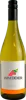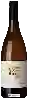
Winery Shale OakGrenache Blanc
 White wine
This wine generally goes well with poultry, rich fish (salmon, tuna etc) or shellfish.
Food and wine pairings with Grenache Blanc
Pairings that work perfectly with Grenache Blanc



Original food and wine pairings with Grenache Blanc
The Grenache Blanc of Winery Shale Oak matches generally quite well with dishes of rich fish (salmon, tuna etc), shellfish or poultry such as recipes of salmon carpaccio with pink berries and shallots, my chef's pot or chicken nuggets.
Details and technical informations about Winery Shale Oak's Grenache Blanc.
Discover the grape variety: Blütenmuskateller
An interspecific cross, obtained in Russia in 1947, between Severnyj - a relative of Vitis amurensis - and Muscat à petits grains blancs, which is also said to have Muscat fleur d'oranger and Muscat d'Alexandrie. Note that it is resistant to mildew and powdery mildew, and that its wine, often produced as a sweet sparkling wine, is of the muscat type, though less pronounced than that obtained from the usual muscat grape varieties. Unknown in France, it can be found in Germany, Austria, Belgium, the Czech Republic, Bulgaria, Russia, Hungary, Ukraine and Australia.
Informations about the Winery Shale Oak
The Winery Shale Oak is one of of the world's greatest estates. It offers 14 wines for sale in the of Paso Robles to come and discover on site or to buy online.

The wine region of Paso Robles
The wine region of Paso Robles is located in the region of San Luis Obispo County of California of United States. We currently count 940 estates and châteaux in the of Paso Robles, producing 3510 different wines in conventional, organic and biodynamic agriculture. The wines of Paso Robles go well with generally quite well with dishes .
The wine region of California
California is the largest and most important wine region in the United States. It represents the southern two-thirds (850 miles or 1,370 kilometers) of the country's west coast. (Oregon and Washington make up the rest. ) The state also spans nearly 10 degrees of latitude.
The word of the wine: Herbaceous
Vegetable odour reminiscent of freshly cut grass and considered a defect of the wine.